


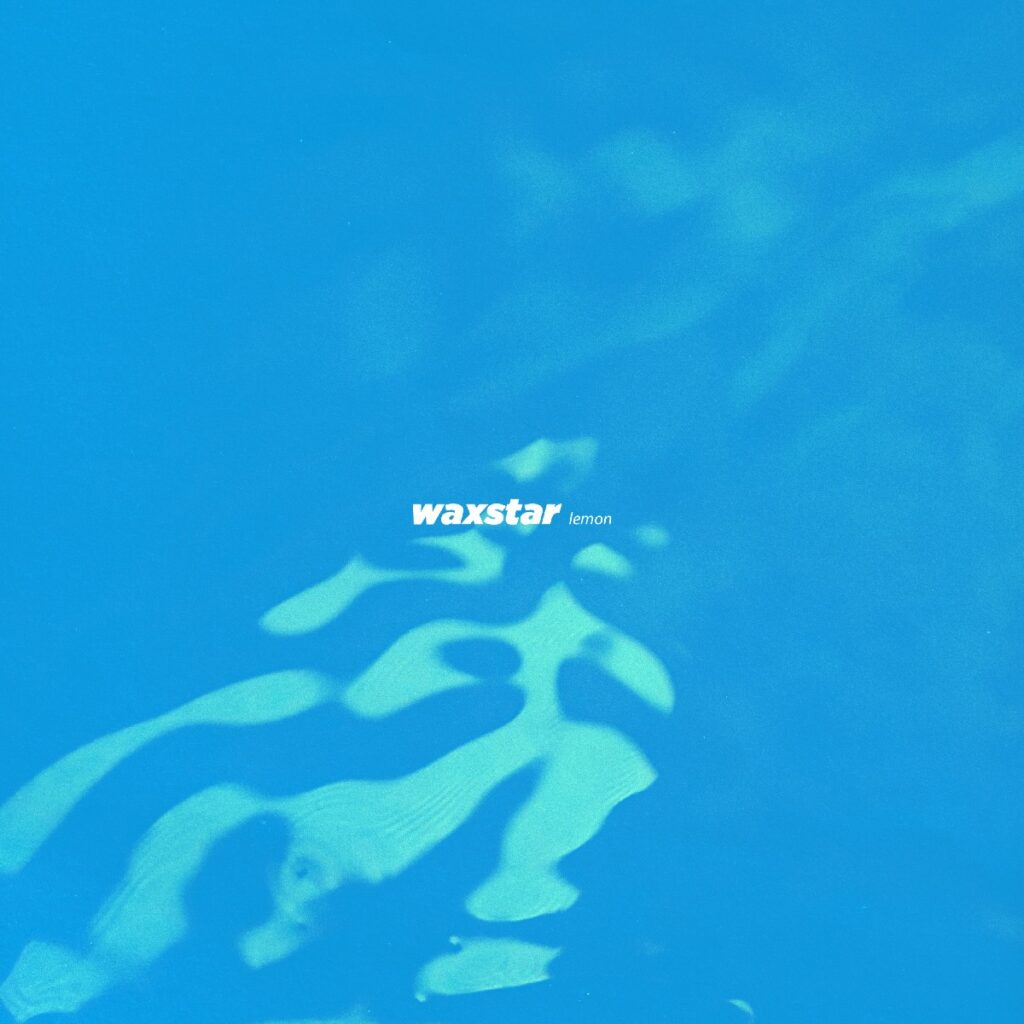
‘Lemon’ is the perfect example of what it means to craft music with purpose and meaning. Produced by French sonic alchemist Waxstar, the piece unfolds with a hypnotic electro-ambient allure, blending ethereal tones and dreamy, kinetic beats that invite escapism and freedom. Yet, behind its luscious facade lies a deeper meaning, with Waxstar adamant about drawing attention to AI’s dramatic water usage.
We’ll be hearing from him in a second, but for now, it’s good to remember the striking talent that has propelled the French producer for the past decade. Debuting with ‘Soleil Levant on Jamendo’ EP in 2013, Waxstar has always championed a certain crepuscular quality in his music, blending nostalgic tones with highly dance-inducing and gritty allure. In that sense, ‘Lemon’ represents a bit of a change of perspective on that very same formula.
Intrigued by the project, we caught up with Waxstar to learn more about his artistry… Interview below!
Hi Waxstar, thanks for chatting with us! Before we dive into your latest single, I’d love to know more about the human behind the project. Where does your love for music come from? Is there an artist who particularly influenced you growing up?
Hello Gabriel! Thank you for this interview. I have always been drawn to music from a very young age. I grew up in a family where music had an important place. I was born in 1993, a period rich in musical discovery. I composed my first pieces of music between the ages of 6 and 7, and it was catastrophic. My early influences were quite varied; I could listen to Dead Can Dance as easily as Madonna or Nirvana, dance music and some pretty hard techno. Then, still quite young, I got my first real musical revelation with the band Mecano. I think the emotion I felt was visceral.
‘Lemon’ is your latest single, a track that blends aural nostalgia and dreamy, vaporous soundscapes. The result is an elegant electronic piece, one that feels evocative and full of escapism. When presenting the record, you have been quite vocal about AI and its water use. What’s the connection between the two?
For ‘Lemon’, I wanted to recapture the atmosphere of the 2000s, so I dove quite deeply into nostalgia, MSN Messenger, Windows XP, the sounds of that era… I recalled a little of that carefree feeling we had back then, but also the way it was impacted in 2001 by a terrible event we all know. Quite naturally, I wanted to offer something easy and nostalgic while conveying a message that matters to me. When I picture ‘Lemon’, it evokes images of water for me, so it was fairly easy to connect that with the water consumption generated by AI.
From a production standpoint, what were your main references when making ‘Lemon’? Do you have a favourite workflow when writing music? Do you mainly produce using software or analogue instruments?
I drew my main references from electronic and house music of the 90s, as well as video games from that era, which have always had an important place in my creative universe. When I compose music, I like to add references to worlds that speak to me, and sometimes it’s very niche, even downright obscure. Mainly, I give myself free hand and I also try to have fun making music. I produce primarily on my DAW, in my small home studio, and I pair my compositional work with an 88-key master keyboard.
Compared to anything you have released last year, I found ‘Lemon’ to lean more heavily into proper dance music. Is this a conscious shift or just a temporary deviation?
This track is indeed more dance-oriented than the others. Sometimes I like to deviate; it’s important to feel free. In music, there is nothing worse than chaining yourself down. However, I must admit that at the moment, my style is quite different from this track and my previous ones. My new productions lean more towards a blend of ambient, industrial and alternative styles.
I appreciate your strong position against the proliferation of AI data centres and their excessive water use. Is this a cause close to your heart? Would you consider yourself an activist?
Thank you! It’s a cause close to my heart, and I am very concerned about the future of our artistic professions, which are already precarious and difficult. I think we urgently need laws and regulations around generative AI. I consider myself an activist on various fronts, and I try as best I can, at my own level, to share messages of awareness and tolerance regarding various causes that matter to me.
Your AI stance is rather clear, and I get the impression you might not be particularly friendly towards anyone using generative AI for frivolous purposes. What are your thoughts on the impact that artificial intelligence has had on the global music scene?
I have a fairly strict position on AI. To tell you more, AI has always existed and has been around in various fields long before this wave, and that’s OK. I’m not against a reasoned use of AI when it comes to, for example, planning personal tasks, organising one’s ideas or managing one’s schedule, but as soon as there is creation of content, that’s something I cannot accept. We know that all creation made by generative AI steals data without the consent of artists, it’s a violation of copyright. I think all of this harms our ability to learn and to create.
Talent doesn’t exist, everything is worked at, you have to dare, keep going, stumble and above all love and accept your mistakes. I composed an incalculable number of terrible tracks before managing to make music that speaks to me and that I enjoy, and even today, I am still learning and moving forward in this field. It’s ok to make mistakes and to do things badly. As for the rest, when I see on streaming platforms that the majority of published tracks are AI-generated, it makes you wonder where things went wrong to get to this point… For me, people who create music with AI simply don’t love music.
You have been in the music industry for more than a decade at this point. Is there a particular piece of advice that you would like to share with our readers? Keep in mind that many in our audience are aspiring musicians and producers themselves 🙂
I think the best advice I have to give is to keep in mind that you have to stay true to yourself. Embrace your quirks, don’t be ashamed of offering a unique universe and above all, don’t force yourself to adopt a style that doesn’t suit you. The most important thing in music is to have fun and stay free, to express your emotions, and I would like to say that imperfections, sometimes, are what make a piece of music perfect.
Lastly, what’s next for Waxstar? Can we expect further releases from you later in the year?
I am working on a new music album, which, I must admit, is taking a lot of time, but it’s without a doubt the most personal and most accomplished work I have made. It’s very different from anything in my discography. On this album, I sing about rather serious subjects, and I touch on, among other things, mental health. Being autistic, it was important for me to take stock and to create something intimate that I hope will be able to help people in need, because music is also a wonderful outstretched hand for feeling less alone and understood. It will normally be available in 2027.