


If you are looking for cinematic-coded ambient music, ‘Aurora’ is likely an album that would serve you well. To us, the record provided 46 minutes of pure cathartic bliss, a deep dive into imaginative textures and orchestral-like lusciousness, as well as a variety of emotional moods. From nostalgic melancholy to quaint euphoria, ‘Aurora’ has it all; it’s a crepuscular, hypnotic record, the sort of album that would soundtrack a solitary moment of stillness, a personal moment of reflection.
Penned by Lithuanian producer and creative Nortas, ‘Aurora’ is far from being an abstract body of work. Its roots can be found in club-oriented territories, and throughout the tracklist, one can find a certain dualism between beatless, soundscape pieces and more electrifying, groove-laden cuts. The overall mood remains the same: unpredictable and hard-hitting, especially at an emotional level.
Intrigued by the record, we caught up with its author, Nortas, to learn more about his artistry and creative process… Interview below!
Hey Nortas, thanks for chatting with us! I have already introduced you and your music, so the reader will have an idea of what you stand for. That said, I’d love to know what motivates you to make music, generally speaking? Do you consider artistic expression a fundamental need?
Hello, and thank you for having me!
That might sound like a cliché, but life itself has been the main driving force behind my music. Most of the ideas are being born not in the studio, but while doing something far away from music – whether it’s hiking, travelling, or simply reflecting on certain moments or experiences from the past.
To be honest, I don’t know exactly why I keep making music. I gave up on the dream of becoming a full-time artist a long time ago, but I still keep coming back to spending a lot of time in the creative flow. So, if I had to say whether it’s a fundamental need for me, I’d go with yes – but I don’t want to push that idea too hard.
For years, it’s been an on-and-off thing for me. I might work on several projects for one month and then stop completely the next, simply because I feel no need for it at that time, or I just need time to reset and focus on other things. Even though I constantly have ideas, being in “pause mode” means that I have to let them go – unless they stay with me long enough.
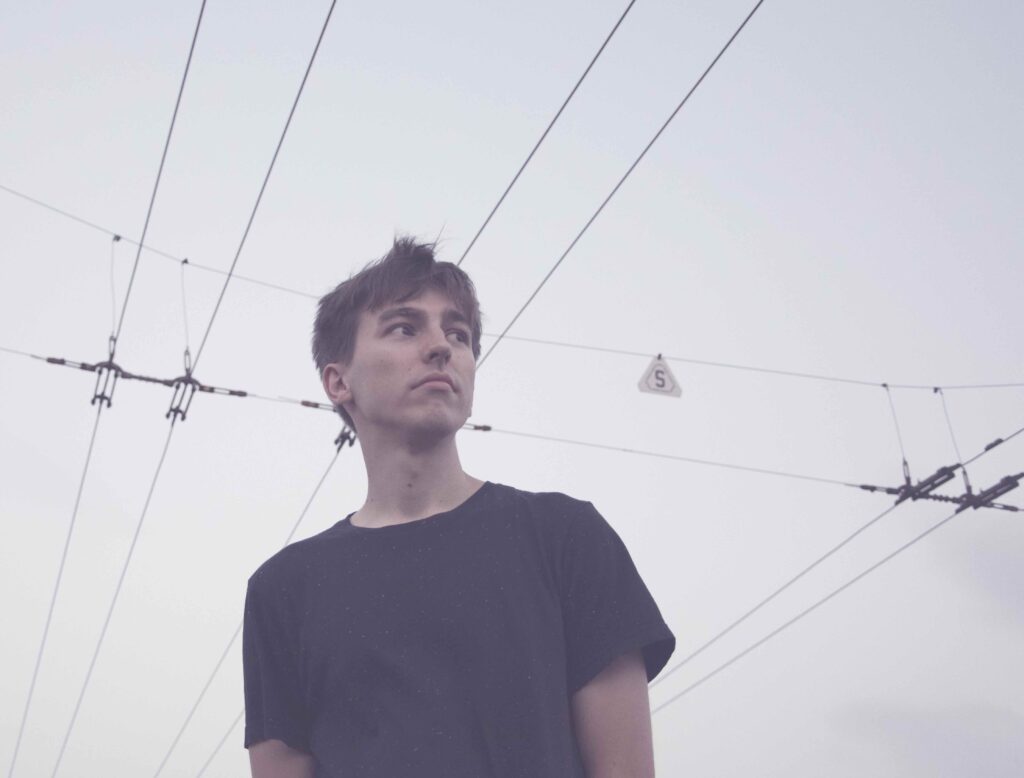
Nowadays, you have found a fitting refuge in leftfield electronica and ambient-coded soundscapes. Yet, your musical journey has been constantly evolving. Take us through its beginnings: is there something of someone in particular that has influenced the artist you are today?
I was making house music and DJing for quite a while before starting the Nortas project, and around 2017, I stumbled upon Christian Löffler’s music, particularly the album “Mare”. I found that record astonishing – how the themes translated through listening, how organic and “homemade” the songs sounded to me. It was a spark that pushed me to climb out of my old ways and try to make music like that – something that makes you feel nostalgic and close to home. My debut Nortas album “In Grey”, released in 2018, was heavily inspired by Löffler’s music.
Another electronic act worth mentioning is Kiasmos. I took a lot of inspiration from them around 2020, as their music made me realise how beautiful and powerful instruments like the piano or strings could sound in an electronic piece.
I think from that point on, I started to go more in my own direction – exploring, experimenting, and trying to find sounds that inspired me or simply sounded interesting without having an existing reference in mind. With each new project, I felt I was moving further toward building something that wasn’t stylistically bound to any of those influences.
Right now, I feel that I have developed a style of my own, but I still hear comparisons to Christian Löffler to this day – not sure if that’s a good thing or not…
‘Aurora’ marks your latest album, a collection of eleven dreamy, luscious electronic episodes. An interesting feature of the record is the amount of field recordings that pay a tribute to Mother Nature… Is there an overall message behind the album?
The ideas often come to me when I’m in nature, whether it’s during a trail hike or simply spending time outside, so I could say I owe a big part of my inspiration to the wild.
In recent years, I’ve started to appreciate the tiny things more than I did before – the melodies and rhythms of bird calls, the calming “white noise” of the trees or the sea… I guess one of the ideas behind the album was to incorporate the life that goes on around us through sampling, because in a way, I think it’s more musical than it seems.
A good example might be the track “Šarkos daina” (which means “Magpie’s Song” in Lithuanian). It was built around a sample I recorded on the outskirts of my hometown, where I came across a magpie singing. That moment felt very heartwarming – the bird was shy and hiding in the trees, but I could hear its song very clearly (I found that quite relatable as an artist). I knew I had to sample it and turn it into a song, which became one of my favourite tunes of mine so far.
I don’t want to call nature some kind of infinite sample library, but sometimes the sounds out there arrive at exactly the right moment and sync up with whatever is happening inside our minds. I’d like to believe that organic music like this makes the listener appreciate nature more and become more aware of its fragile and temporary state.
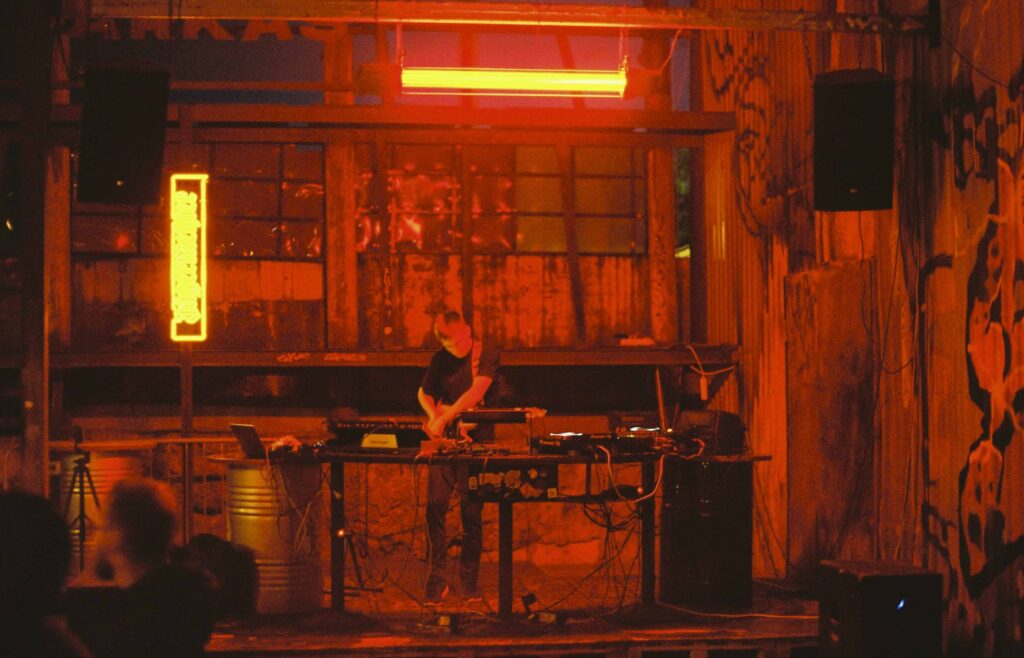
Your press release mentions that the record is divided into four chapters… can you help us identify them?
Tracks 1-3 make up the first part, tracks 4-5 the second, tracks 6-8 the third, and tracks 9-11 the final one.
While listening, you can actually hear these chapters play uninterrupted, separated by pauses. There were originally supposed to be 12 tracks in total, with each part consisting of 3 tracks, but right before finishing the mixing, I decided to cut one off.
Judging by what we hear in ‘Aurora’, you are a very talented producer and sound designer. Take us behind your creative process: do you usually work alone? Is there any instrument or synth that has become your go-to source of inspiration?
Thank you! I do work alone, and I mostly keep it to myself by working with headphones on – I’m probably too shy for anyone else to hear the early bits. I can’t let anyone else, not even the neighbours, hear what I’m trying to play or build, but I hope to overcome that in the future.
The creative process usually starts with an idea that comes to me before I even open the DAW – it can be anything, from a piano melody to a field recording. I try to put myself into a creative state, jam a little, find the right sounds to layer with the original idea, and build the foundation from there. At that stage, the less I think, the better the results, so it’s actually quite hard to describe the process properly.
As I move closer to finishing a track, I always play it for my wife. I’m very grateful for the feedback she gives me, as she often helps me identify the strongest parts or simply point out what works and what doesn’t. Based on how important her feedback is, I would definitely consider her a collaborator to some extent.
As for favourite tools, it usually depends on the mood. I don’t own much gear and mostly work with digital tools and VST plugins. For something intimate or calm, I usually load up a piano library (“Mir” by Elementary Sounds has been my favourite choice so far), and play around on the MIDI keyboard until I find something that really touches the heart. I also love experimenting with my Behringer Poly D synth, which gives me a warm and nostalgic feeling.
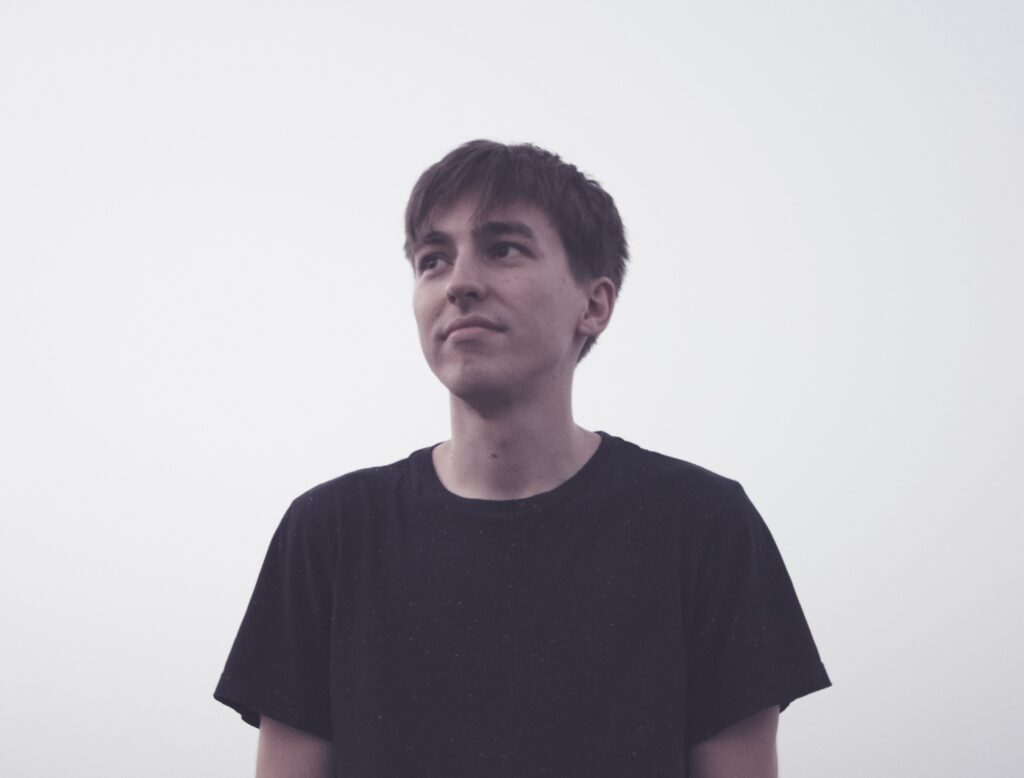
Given the unconventional nature of your music, do you divide the production and mixing stages? Or is that just a creative continuum? I suppose there’s no standard ‘mixing’ happening in this case?
I do separate the production and mixing stages, but I’ve been doing that only for the past two albums. Earlier, I didn’t have a good understanding of what mixing really was, so I just let everything happen naturally.
“Aurora” was the first project where I entered the mixing stage after seriously locking in the versions as they were, which actually helped me focus more on how I wanted the pieces to translate and how to maintain the core foundations of those tracks, rather than just keep adding more elements or unintentionally ruining something. That approach made the whole process much clearer and more intentional for me.
‘Aurora’ is a very dynamic and crepuscular album, requiring mastering that respects dynamics and doesn’t flatten the overall aural picture. Has that been an issue for you at all?
The main challenge with mastering was reminding myself that loudness is not something worth chasing. I do not consider myself a good mastering engineer, but I love working on everything by myself and making it a completely DIY project from start to finish, so I feel quite happy with the result I ended up with.
The goal was indeed to keep the record dynamic, bright and clean, and I believe I succeeded in that sense. Even though with electronic music you might always want to push everything just a bit further, I tried to focus on the overall feeling instead and avoid squashing things just too much.
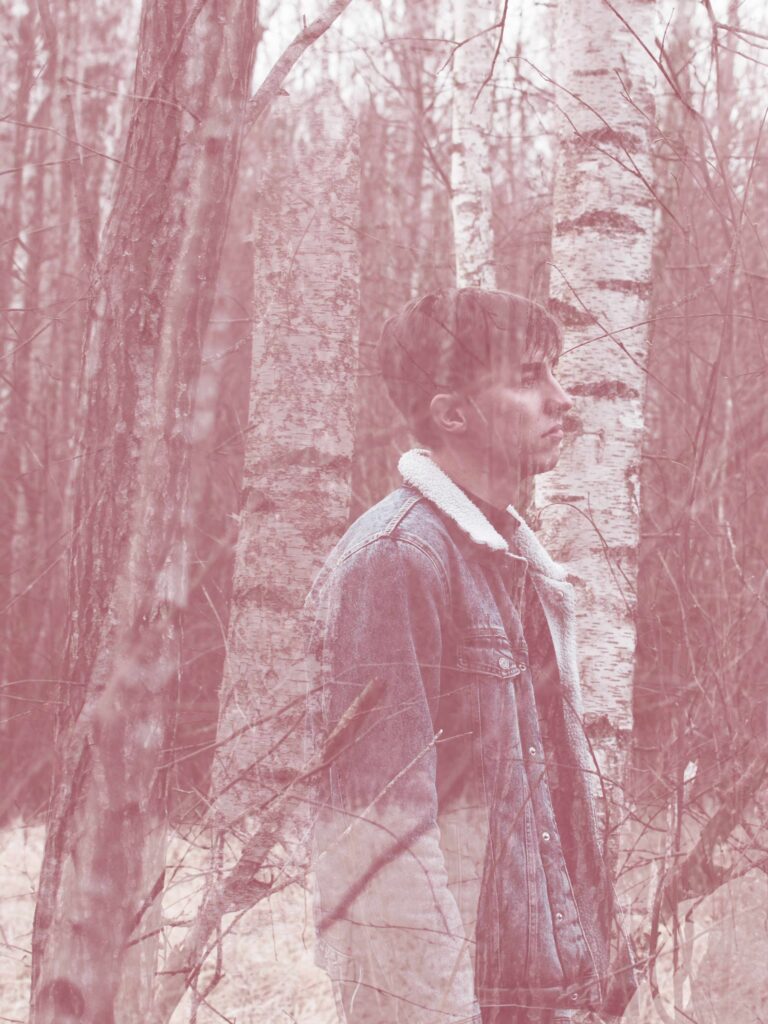
Exploring your discography, it seems to me as if over the years you have gradually distanced yourself from dance-oriented influences, shifting from a club perspective to more of an easy-listening, artistic ethos. Is that something that you have noticed as well?
Yes, and I think that shift feels quite natural. On one side, I think it has a lot to do with the changes in my own lifestyle – I’ve become more involved in hobbies like reading or hiking, focusing more on slowing down and avoiding unnecessary noise. Because of that overall change, I’ve been drawn more towards music that calms me down (mostly ambient and piano music), rather than something built around a beat. With “Aurora”, I wanted to make a record that would do a 50/50 blend of those two worlds.
On another note, I feel that I appreciate art and artists more and more as the years go by, especially in the age of AI. That appreciation encourages me to keep trying new directions for myself, leaving space for imperfection or anything that makes the work feel more human. I believe “Aurora” was one of the best works I did from that artistic perspective.
Lastly, what’s next for Nortas? Are you performing any shows in the coming months?
Sadly, I won’t be doing any live shows anytime soon. At the moment, I have a few more projects in progress, one being a remix album for “Aurora” that I’m curating, and I’m very excited about it! After that, I will probably take a break from music to recharge and come back refreshed to work on the next record – fingers crossed.