


When approaching Books Of Moods, it pays off to visualise the French artist busy in his Parisian studio, carefully and with love writing ethereal, hypnotic material drenched in nostalgic lyricism and peculiar theming. That’s pretty much how ‘Dreams’ came alive. Marking the project’s latest album, the record unveils eleven wonderful tracks steeped in tender art-rock goodness, an aural stream that feels malleable and spacious, always hazy. Hints of indie allure and folk leniency are heard from time to time, although ‘Dreams’ does enjoy a thoroughly eclectic identity.
Known by day as Hugo Sailer, the talented French creative writes about pure escapism, embracing nostalgia and introspection with fictional elegance. “Our most vivid memories might be the ones we never fully lived”, as Sailer eloquently explains. Out now via Void City Records, ‘Dreams’ stands out as a timeless, personal work, one that does not feel derivative or popular. It’s the result of Hugo’s committed musical research.
Intrigued by the album, we caught up with Sailer to learn more about his artistry and future goals… Interview below!
Hey Hugo, thanks for chatting with us! I have spent some time with ‘Dreams’, and I was quite intrigued by its emotional restraint; as in, it’s a record that’s not too intense, or too laidback, a fine balance between extremes, one that results in a hypnotic and hazy listening experience. Would you agree with my impression of the album? To add, the album’s title strongly relates to that…
Thank you, I actually really like the way you described it. I think that balance was at the core of ‘Dreams’. I didn’t want the album to feel overly dramatic or emotionally overwhelming, but I also didn’t want it to become background chill music without depth. I was searching for a certain kind of suspended emotional state, something blurry, intimate and difficult to fully grasp, like certain memories or dreams themselves.
The title relates strongly to that idea. Dreams can feel comforting and unsettling at the same time; they rarely exist at emotional extremes. There’s often a strange softness to them, even when something melancholic is happening. I wanted the record to move in that space between calm and tension, clarity and fog.
A lot of the production choices were made with that intention in mind, too: restrained vocals, floating textures, repetitive elements, and slow emotional progression. I wanted listeners to almost drift inside the album rather than be constantly directed by it.
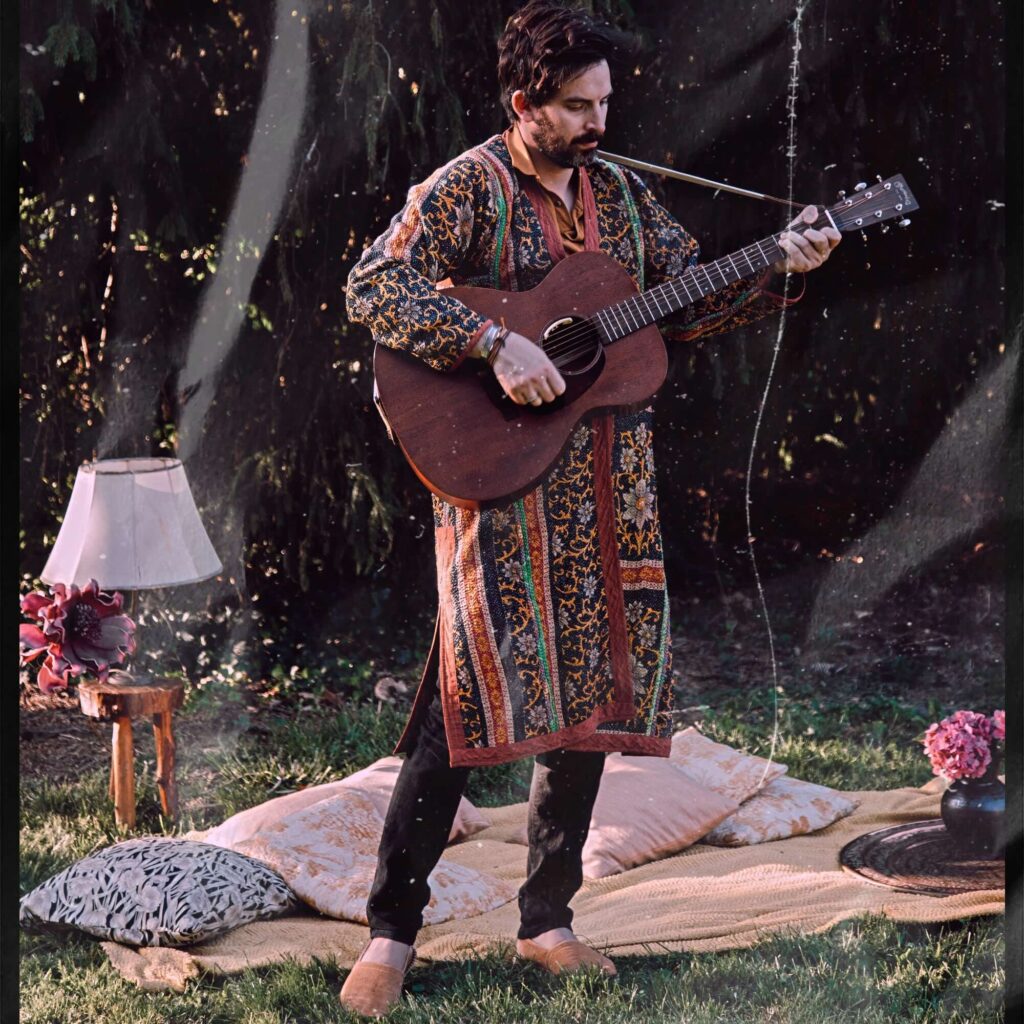
From a sonic standpoint, the record also introduces a functional tension between retro influences (soul and psychedelia from the 60s and 70s) and more modern, expansive atmospheres. It’s clear that you are drawing from a wide pool of influences; what are some of the biggest ones? Are you satisfied with how the record turned out, in the end?
One of the things I love most about music is when it feels timeless, when you can’t immediately tell which era it belongs to. With ‘Dreams’, I was very inspired by the emotional freedom and warmth of artists from the 60s and 70s like The Beatles, David Bowie, The Velvet Underground or T. Rex. There’s something raw, melodic and deeply human in those records that still resonates today.
At the same time, I’m equally influenced by more modern artists such as Arcade Fire, Grandaddy, Acetone, SALES, Crumb, Mac DeMarco, Patrick Watson, and Radiohead. I love the way they create atmosphere and emotional space without forcing emotions too much. A lot of these artists have this hazy, intimate quality that definitely influenced the sound of the album.
I didn’t want ‘Dreams’ to sound purely retro or purely modern. The goal was really to create a bridge between those worlds, keeping the organic songwriting and imperfections of older music while exploring more immersive and cinematic textures.
And yes, I’m very happy with how the record turned out because it feels very honest to me. It captures a specific emotional state and period of my life. I think ‘Dreams’ became exactly what it was supposed to be: something intimate, nostalgic and slightly surreal.
Doubling down on my previous questions: despite the nostalgic factor found in ‘Dreams’, the album feels contemporary and fresh. Can you take us through its production and recording process? Was it a solitary work, or did you have collaborators? As the reader might know by now, you are a multi-instrumentalist, too.
Usually, everything starts with a melody on the guitar. Sometimes it’s a melody I feel like I heard somewhere before, from birds, distant music, something hidden in my memory, or even directly from a dream. Once I find that melody, it almost tells me what the song is about emotionally, and from there, the lyrics come naturally.
Then I begin recording and slowly build the song layer by layer. Most of the time I start with acoustic guitar, then add electric guitars, synths, bass and drums. I like to let the songs evolve very instinctively when I’m in a creative bubble. It’s a strange feeling because during those moments, it almost feels like someone else is taking control of the process. There’s something very intuitive and magical about it.
Even though a large part of the album was created alone, collaboration was still very important to me. For songs like ‘Happiness’, ‘Gaia’, ‘Space Part I & II’, ‘Holidays’ and ‘Travel’, my friend Camille Guilleton, who is an incredibly talented drummer, recorded the drums and really brought a living energy to the tracks.
For ‘Space Part 1 & 2’, Lara Martinovic sang with me, and on ‘Fashion Romance’, Susie Lopez Uros, who also mixed the album, added vocals as well. Those collaborations helped expand the emotional world of the record while still keeping its intimate atmosphere. I think that balance between solitary creation and human collaboration is also part of why the album feels both nostalgic and contemporary. The songs were born in a very personal way, but they became bigger through the people who contributed to them.
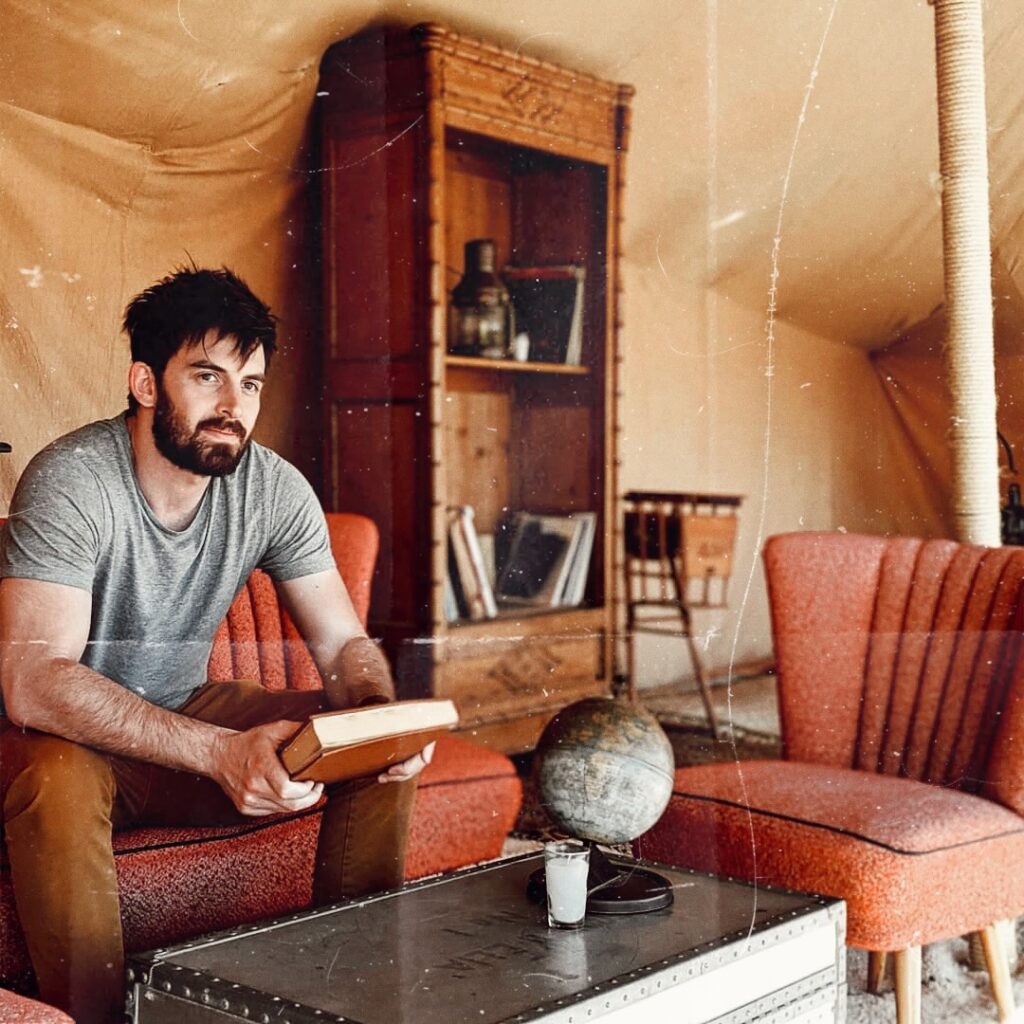
From a songwriting standpoint, do the songs connect into a wider theme, or is each track its own lyrical universe? Is there common imagery behind the record?
At first, I wanted ‘Dreams’ to be a real concept album inspired by artists like David Bowie or Pink Floyd, with fictional characters and a continuous storyline. I had imagined the story of Woodrow Luth, a man drifting away from his constellation and crashing onto Earth. But while working on the album, I realised that building such a structured narrative could sometimes create distance between the songs and the listener.
So instead, I decided to create something more open and cinematic, an album suspended between fiction and reality, where listeners could project their own memories and emotions into the songs. I wanted it to feel like a dream: sometimes nostalgic, sometimes melancholic, where you’re not always sure if what you’re feeling comes from a real memory or from imagination.
Even though each song has its own lyrical universe, they are all connected emotionally and visually. I wanted every track to represent a different scene or emotional moment within that dreamlike journey.
‘Space’, the opening track, introduces the dream and this feeling of floating into another reality. ‘Slow Day’ is about taking time for yourself without guilt, embracing slowness in a world that constantly pushes us to move faster. The title track is instead a love song where love exists both in daytime and nighttime, almost like a permanent emotional state.
‘Travel’ expresses the desire to discover the wonders of the world and escape routine, while ‘Gaia’ is a kind of tribute and plea to Mother Nature. ‘Space Part 2’ acts as a cinematic transition into the second half of the album.
Then the atmosphere becomes slightly more chaotic and playful with ‘Holidays’, which feels like an unpredictable adventure with friends. ‘Happiness’ is about the feeling of being complete when surrounded by the people you love. ‘Sunday Mood’ captures the strange lightness of Sundays, that in-between moment between the end of something and the beginning of something else.
Finally, ‘Fashion Romance’ brings a touch of madness and eccentricity into love, while ‘Amoureux’, the only French song on the album, closes the journey in a more intimate and acoustic way. It’s actually a French reinterpretation of ‘Happiness’. So even if the album no longer tells one linear story, all the songs are connected through this same emotional and cinematic atmosphere.
I have learnt about your passion for cinema. What role does it play in your music?
Cinema plays a huge role in my music; I watch a lot of films and series, to the point where I sometimes start predicting scenes or storylines before they even happen. What fascinates me most is how each director has such a unique artistic identity, their own way of approaching storytelling, visuals, rhythm, emotions or atmosphere.
I’m very inspired by filmmakers like Wes Anderson, Evan Glodell, David Fincher, and David Lynch. They all have very distinctive artistic languages and worlds. Sometimes it comes through the visual direction, sometimes through pacing, silence, tension or the way emotions are suggested rather than explained.
I think I approach music in a very cinematic way, too. When I compose, I often imagine scenes, colours, landscapes or movements rather than technical musical structures. I want songs to feel immersive, almost like sequences from an imaginary film. Even the transitions and atmospheres on Dreams were conceived with that mindset.
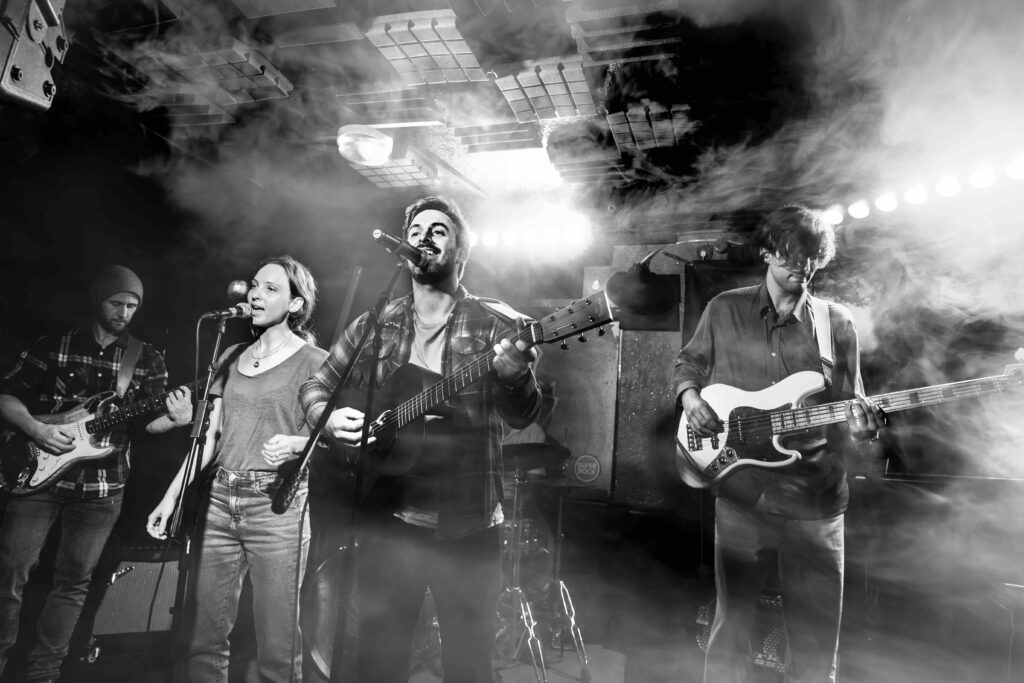
©Marion Ruszniewski
I am curious about your upbringing; was there someone or something that motivated you into pursuing a music career?
As a teenager, I used to play acoustic guitar and sing a little, mostly for myself. But once I started focusing on my professional career, music slowly moved to the side and became something more distant.
Everything really changed around five or six years ago, when I organised a small music festival with friends. They convinced me to perform a few songs alone with just guitar and vocals. After the concert, the sound engineer, Camille Guilleton, came to me and told me he genuinely connected with the music and that I should explore it more seriously. That moment stayed with me because it was probably the first time someone external made me realise that what I was creating could resonate with people.
From there, I became obsessed with learning and creating. I started teaching myself different instruments, recording techniques, production, and software like Ableton. It was a very organic process driven mostly by curiosity and emotion rather than by the idea of pursuing a career at first. I think what motivated me most was this feeling that music allowed me to express things I couldn’t always express with words alone. Little by little, it became less of a hobby and more of a necessity.
‘Dreams’ is almost entirely sung in English. Do you find it hard to switch between languages when you write? Is there a practical difference between English and French?
Most of the artists I grew up listening to sang in English, so over time it became very natural for me to write and sing in that language. In a way, English also creates a certain emotional distance that allows me to express personal feelings without feeling completely exposed. There’s almost a protective layer to it.
Singing in French is much more difficult for me because there’s no barrier at all; it’s my native language, so every word feels more direct, more intimate and more vulnerable. I think French carries emotions differently, too. It feels more grounded and raw to me, whereas English sometimes allows for something more dreamlike or abstract.
That’s partly why the final song on the album, ‘Amoureux’, is in French and fully acoustic. I wanted the ending of the record to feel more stripped down and sincere, almost like the dream slowly disappears and leaves you alone with something more real and fragile. Since ‘Amoureux’ is also a French reinterpretation of ‘Happiness’, it felt meaningful to close the album that way, with less production, less distance, and more intimacy.
Lastly, what’s next for Books of Moods? Are you planning any live shows later this year?
It’s been about a year since my last live show, but I’m very lucky to be surrounded by amazing musicians and friends for the live performances: Camille Guilleton on drums, Daniil Kozachuk on bass, and William Chabas on electric guitar. Playing with them really gives another dimension to the songs because the music becomes more alive, spontaneous and emotional on stage. Right now, I’d love to start again with a few more intimate acoustic shows in Paris before bringing the full band back for larger performances later on. I think the atmosphere of ‘Dreams’ can evolve in very interesting ways live, depending on the setting.
At the same time, my main focus now is already shifting toward the second album. I’ve been writing a lot recently, collecting ideas, melodies and images. I don’t want to simply repeat myself, but rather continue expanding the universe of Books Of Moods while exploring new emotions and sounds. I still want the music to feel cinematic and immersive, but maybe with a different energy this time.