


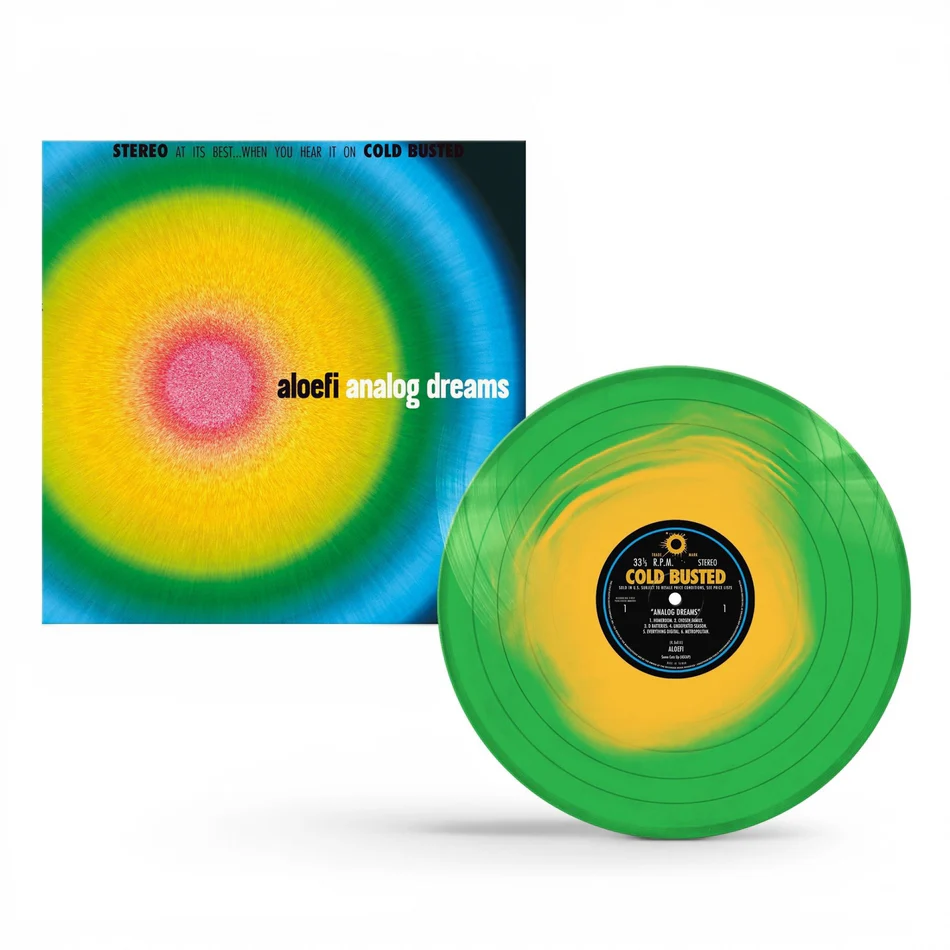
Making lo-fi beats has become a bit of a free-for-all nowadays, yet a lot of producers seem to miss the mark when it comes to sonic authenticity and hypnotic charge. Aloefi certainly doesn’t, reiterating his eclectic talent release after release. Known for his work in nostalgic hip-hop territories, the New York-based creative is now gearing up for a large album release, ‘Analog Dreams’.
Packed with elegant soulful melodism and vintage grit, the record feels vibrant and inherently old-school, yet it also quietly finds its place in the modern era. It’s the perfect soundtrack for a lazy afternoon, or even a laid-back party. Drawing inspiration from his upbringing in Philadelphia, Aloefi does a wonderful job of compiling an album that’s a joy to listen to.
‘Analog Dreams’ is set for release on August 28th via Cold Busted. Intrigued by the record, we caught up with Aloefi to learn more about his artistry and latest record… Interview below!
Hey Aloefi, thanks for chatting with us! I have listened to your upcoming album ‘Analog Dreams’ a fair bit, and I am quite hypnotised by its vaporous, nostalgic character and the soulful, jazz-flavoured allure in it. Before we dive deeper into the record: are you proud of how it turned out?
I’m definitely proud of how the album turned out and that I have the support of such a big tastemaker in instrumental hip-hop, Cold Busted, on board as the label, but I’m more proud of the journey I’ve been on. It took a long time for me to master my own sound and be confident in the kind of records I was producing. I stopped releasing music for about 10 years, but I never stopped working on my sound, so I’m proud of myself for never giving up, and now I get to share this music with the world.
People sometimes discard lo-fi beats as merely background noise; yet, everything you compose carries a nuanced and meaningful core philosophy. What inspired ‘Analog Dreams’ as a whole?
I am very motivated to have listeners experience my beats and engage with them, rather than just hear them as background noise. It’s hard to do that without lyrics, but each one of my beats is inspired by a memory, or a theme, or a story, and that guides the whole sound, the choices that I make with the melodies, the percussion, and such. ‘Analog Dreams’ was originally titled ‘2004’ as a concept album that revisited the year I fell deeply in love with hip-hop and music in general. My brother had been shot and paralysed three years earlier, and my parents had just split up. I spent a lot of my time over the next couple of years in deep thought and isolation, and music, specifically hip hop, and the way the beats looped and sampled familiar songs my parents introduced me to – it helped regulate my emotions, which led me to want to create that feeling myself. Every song is based on a memory from that time, and at some point I’ll tell those stories.
I am curious about the source of the samples used in the album. Did you refer to a particular set of records, or just collect what sounded good across the board?
Knowing I would submit this demo to Cold Busted, I had to avoid directly sampling vinyl, which is what I love to do. For this album, I relied on vinyl records for inspiration and tried to recreate those vibes through DAW programming and instrumentation, or sketches or loops I’ve had sitting on my hard drive for years, which I then sampled on my MPC to create loops and that classic hip-hop feel. The album is meant to sound like I sampled classic records, so I added a lot of texture and analogue sounds to give it that warmth.
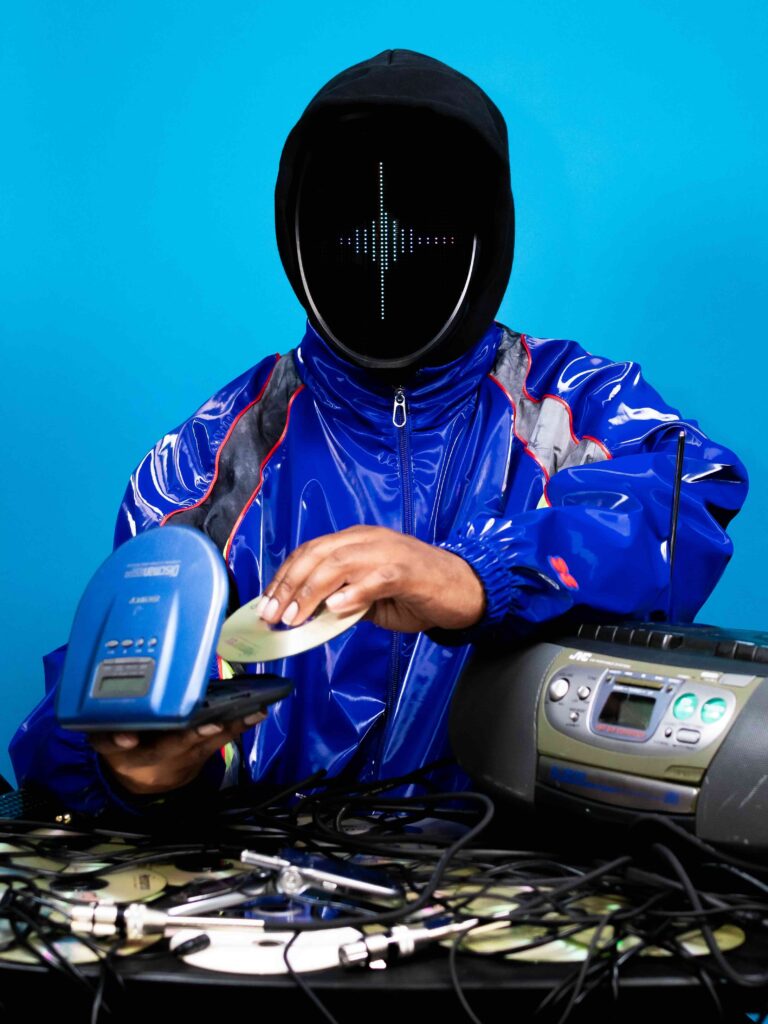
Something that we should note is how your workflow revolves around an Akai MPC, a choice that wraps your material in hip-hop authenticity. Do you find you make better music on a traditional sampler than in a modern DAW?
I worked with DAWs since I was 16, making beats, first with FL Studio and later with Logic Pro. I’ve been working on an MPC for about a year, and the difference in my production is incredible. I don’t think one method is better than the other, but I feel more creative and take more risks when working with the MPC. It’s my instrument, and I’ve learned to let what’s in my brain just flow to my fingers and the pads. Working with a DAW felt like a science experiment at times; it didn’t give me as much of a feeling, and that feeling is what’s important. If I can feel something while producing, there is a good chance the listener will feel it too. So, to answer your question, yes. I do think I make better music on the MPC.
Do you usually start from a beat or from a melodic sample? How long does it take you to build a full beat, on average?
Most of my beats start with the drums. It’s either a dope break I find, something I program, or a pattern I beat out myself on the MPC. It could be all three as well. To me, the drums are everything. The kick and the snare have to sound right, then I go from there. It takes me anywhere from 30 mins to an hour or two to get something solid. A beat is never really done until I release it; I’m always tweaking details or the mix, but I try not to spend too long on the initial idea. The best ideas aren’t the complex ones; they’re the ones that feel right, and it doesn’t take long to know which ones do and which don’t.
Widening the conversation, I’d love to know what motivated you to pursue music in the first place. Is there anyone or anything in your life that has been instrumental to that?
I love music, and I love hip-hop. Music has been an integral part of my life, a saviour at times. When I started making beats, I didn’t look at it as pursuing music or any kind of career. I just loved that I could sit in my room, take what I was hearing in my head, and make it come out through technology. So for me, I think my pursuit is more about the culture of beatmaking, the
shy and creative kids that just wanted to sit in their rooms or basements all day discovering music and then transforming those discoveries into new creations by sampling them. It’s a pretty addictive form of exploration and self-expression. And all I ever really wanted was to impress my friends and people I knew who loved hip-hop. Like “hey look, this is my entry into this culture that we all love” – is it dope? I think I’m motivated by the pursuit of just doing my part to keep that feeling going.
What are some of your biggest inspirations? Any fellow producer that you look up to?
Producers like Kanye West, Dr. Dre, Just Blaze, Q-Tip, RZA, and J Dilla will always be my core group of producers that I look up to. But I also get a lot of inspiration from Dance and Electronic producers like Daft Punk and Kaytranada. I think what stands out to me about all these greats is that you can hear the chances they took in their work, and the creativity and playfulness with which they play with samples and sounds. It sounds fun when I hear their work, and no matter how heavy the song’s concept is, I always want to enjoy the process.
Lastly, what’s next for Aloefi? Are you active in the NY music scene?
I wouldn’t say I’m active in any music scene, but I’m always down to collab and share ideas or have conversations about music or beatmaking with anyone passionate about it. In the meantime, I just wanna keep trying to be the best father I can be, get better at my craft, and keep having fun sharing these ideas.
There is one thing I’m working on: When I make beats, I lean more toward a hip-hop sound, and when I DJ, I love to play house and electronic music. So I’m working on fusing those two worlds into a sound in some of my new work. I’m excited about that.