


Roxy Rawson’s story is rather unique and complex, and it certainly deserves your attention. Committed to honest, authentic expression and true introspection, the England-born, Berlin-based songstress has recently returned with a slice of soothing and meaningful folk goodness. Drawing from the anti-folk ethos of her youth, Rawson now moves towards more conventional folk material, yet still carrying a great deal of unconventional artistry, a peculiar quality that shines through ‘I found a place in the woods’.
Built over tender orchestral arrangements and boasting a deeply eclectic and meditative flair, the single sees Roxy once again sharing her powerful, malleable vocals with the world; her tone is incredibly lush and dreamy, constantly oscillating between intimacy and anthemic charge. ‘I found a place in the woods’ features acclaimed composer and arranger Jherek Bischof on production duties. The single anticipates Roxy Rawson’s forthcoming LP, ‘Bright Star’, expected for next year.
Intrigued by the project, we caught up with Rawson to learn more about her artistry and future goals… Interview below!
Hi Roxy, thanks for chatting with us! I’ll admit – I have discovered you and your music only recently, hence why I am approaching this interview with a certain curiosity and especially with a certain reverence, given the fragile yet meaningful nature of your artistic journey. We’ll also be diving into your wonderful latest single, ‘I found a place in the woods’.
I was taken aback by the expressivity found in your vocals, especially by their ability to modulate between cinematic grandeur and intimate reflection. I guess it’s a blend of your classical training and the more popular alt-folk influences of your early career. How do you navigate such an eclectic and diverse mixture of references? Is it a conscious choice (to veer towards one or the other), or do you let yourself be inspired by what’s around you?
I don’t know if I’m consciously drawing on those different traditions, but our subconscious is affected by our background, and my musical references do span those different genres, as you mention. I think what matters to me is expressing the range of emotion within a song coherently, so I was careful about analysing this with my vocal teacher and finding the technique and phrasing that would best express the meaning and emotion behind/ within the lyrics of this song.

As we have mentioned earlier, ‘I found a place in the woods’ is your latest single, a personal and heartwarming piece enriched by Jherek Bischoff’s masterful production. Before we dive into its lyricism, I’d love to know the degree of your involvement regarding production and sonic choices. Do you usually take an active role in it? Are you proud of how the track turned out?
I am so proud of how the track turned out. Jherek did an absolutely amazing job of supporting the meaning of the song within his arrangements and production. I began by arranging this song with some pizzicato violin in the verses, moving towards arco as the verse progressed, and playing piano in the B section. Parts were gradually added; my friend Greg Rawson recorded drums for this several years ago while I was in the beginning stage of conceiving this album.
My friend Jim Hewins played the tremolo bass, which gave it an edgy feel. I sense that Jherek took all these elements into account as he added his ideas. We brought in Mauricio Velasierra for the flute solo, a musician well known in the Berlin music scene for his experimental flute playing in the band ‘Witch ‘n’ Monk’, and my friend Roland Satterwhite for some violin solos at the end. Jherek added some other elements, and we had some horns play some further parts.
Jherek is wonderful to work with as he’s very communicative about his work and open to feedback. I had the sense, given what I knew of his work, that he would likely respond musically in a way that I would appreciate, and I very much did. I remember getting the first production and rough mix back and really loved it.
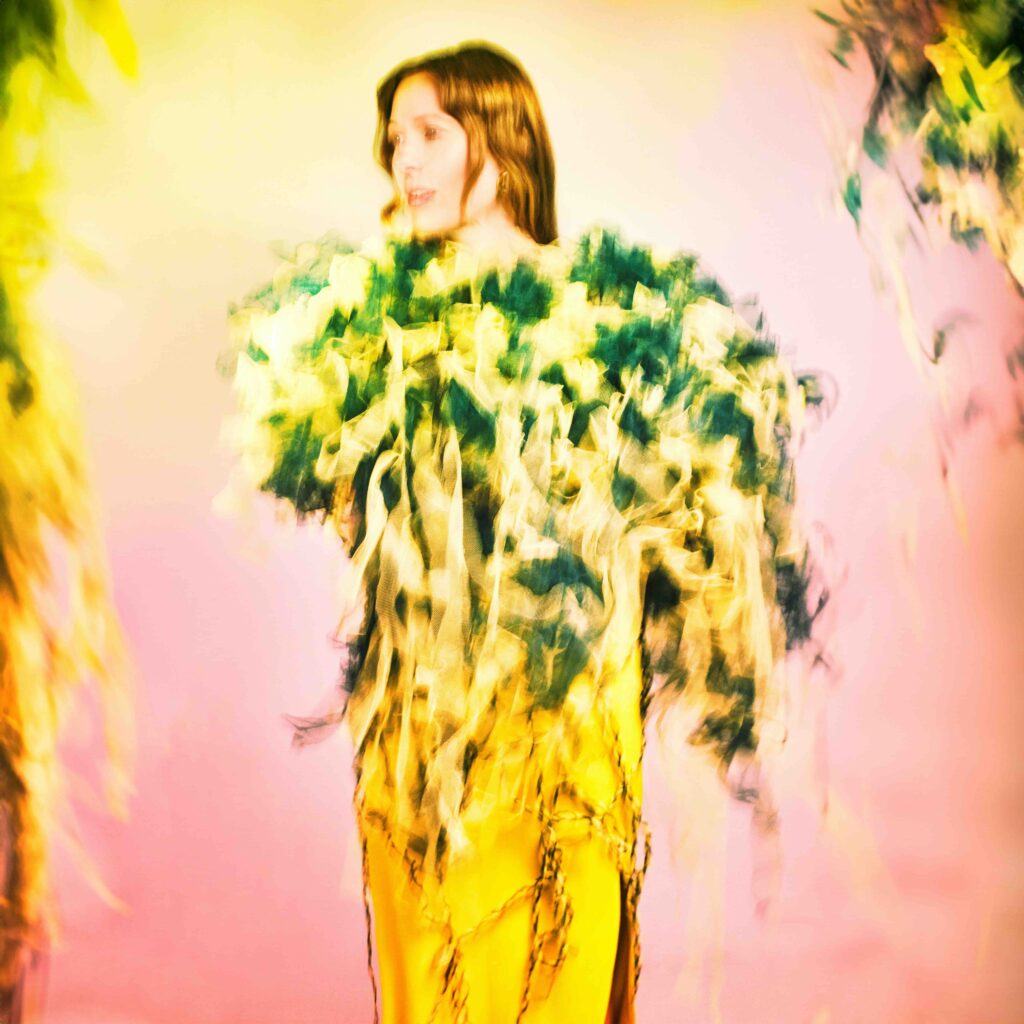
As often is the case in your body of work, ‘I found a place in the woods’ emerges from a place of deep introspection and honest vulnerability. In particular, you mention “finding solace in nature after your divorce”. That feels like a grounding process; would you say you had to discover your true self once again?
Yes. With every relationship that is meaningful to us, we can become accustomed to looking at ourselves not just from our own perspective, but from the perspective of our loved one. Detaching from my marriage relationship was a process of feeling myself again, who I had become all that time while I was connecting with him, and who I was now, now that I was no longer connecting with him in the same way.
I sense that our true nature is beyond the mind and beyond thought and feeling. When I am communing with nature, it connects me to that stillness that is beneath thought and feeling. It helps me access that peace.
You are the founder of a brand new Folk festival in Berlin, ‘Feral Folk Festival’. What motivated you to create such a powerful platform? Are you planning to make it a yearly occurrence?
Yes, I would like to continue hosting it annually. The aim is to support and elevate the talented folk scene in Berlin. I have had the opportunity to enjoy the wonderful music in the scene there, and with my background in the non-profit sector, I saw a way to support the folk music scene in Berlin using those skills.
I am listening to your debut EP dating back to 2009, ‘Changing Things’. I appreciate it a lot, and it does certainly mirror its anti-folk ethos. Who was Roxy Rawson back then?
I think I was a lot less grounded…a lot less connected to my vulnerability and depth of feeling, because I didn’t have the stability to hold what needed to be held back then. With time and growth, I’ve been able to hold space for my younger self and integrate her.
How are you finding the music industry of today, compared to back in the day? It must feel like a different world, in some respects…
I am performing in Berlin now, whereas I was based in London before, so my experience of both times being involved in performing has been more related to the local music scene. I was briefly signed to a small label, and there was some investment in A&R back then. I guess that might be a bit less common now, and indie artists are expected in a way to develop themselves.
This interview wouldn’t be complete without mentioning your year-long battle against Chronic Fatigue Syndrome and Lyme Disease. There’s no need for us to dive deeper into the topic (although the reader might benefit from your Compassionate Body Listening practice), but I would love to know the effect that such a dark, complex period had on your music and art. Has your outlook on creative arts changed, compared to 2008/9?
Yes, my journey with CFS and Lyme spanned the best part of a decade and has and continues to have a huge impact on my outlook. I learnt so much through that experience and healed on many levels, so I’m hugely grateful for that experience. It has helped me to be a version of myself that is more regulated and connected to my true nature. It was humbling, and it has completely altered my understanding of my existence.
I’ve known the deepest physical vulnerability that humans can go through, which connects me to life in a different way. I have a sense that I know what it’s like in old age to lose all your faculties. I know what life looks like when it’s very reduced. And I know what it’s like for life to then become full again. And the fullness after the loss is more full than it could have ever been without knowing the loss.
I always ask a specific question in my interview, especially to people who have substantial life experience behind them. What’s the one piece of advice you’d give to an up-and-coming artist today?
Be true to yourself, but take your craft seriously. Being true to yourself doesn’t mean never investing in improving your craft. When craft is developed, it allows for a fuller expression of whatever the truth is that is running through you, through your hands or your voice. When you possess your own craft more fully, you also have more choices and more creative capacity to express complexity, and that can elevate what you produce.
Thanks for your patience and time. For my last question, I am excited to share that your debut album, ‘Bright Star’, is set to be released next year. What can we expect from the record?
The record includes more pieces that express that opposition of intimacy and full dramatic expression. I believe there is grandeur in vulnerability, in our imperfect humanness, and I had hoped so much that I could express this. I worked hard to express that to the best of my ability within my vocals, and I know Jherek matched that with his own musicianship. I feel very lucky to have been able to collaborate with someone who could support me in realising this through the production as well as the vocals.