


We enter Philamelian‘s nuanced aural universe with a certain reverence and respect, tiptoeing our way around the project’s hypnotic soundscapes and luscious cinematic allure. ‘3 Pieces From An Old Statue’ is the piece that eases us into Çağrı Tozluoğlu’s unique compositional flair, a magical hybrid between neo-classical elements and electronic textures. Hailing from London, the talented musician, producer, and multi-faceted creative has built a striking and successful career in the avant-garde field and in music for moving images.
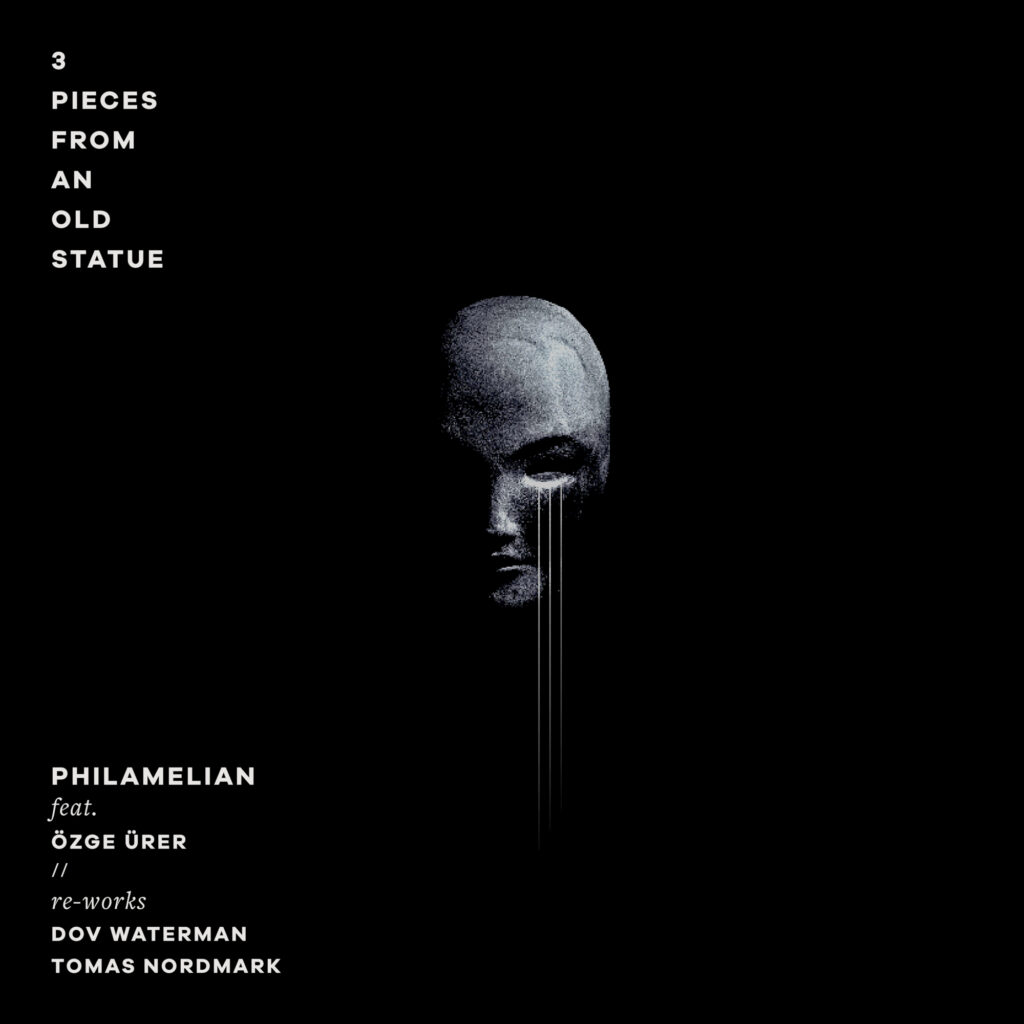
Operating from his own studio, TimbreWorks, Philamelian is not afraid to adventure into unknown territories, unearthing moods and aural experiences that will feel brand new to many out there. ‘3 Pieces From An Old Statue’ is the perfect evidence of that, an EP that brings us the leading track ‘An Old Statue Reimagined’ plus two reworks penned by collaborators Dov Waterman and Tomas Nordmark. Özge Ürer (vocals), Herman Ringer (violin/viola), Yiğit Alp Onat (cello/double bass), and Cana Çankaya (trumpet/choir vox) are the talented musicians who accompany Philamelian in the record.
Intrigued by his boundless artistry, we caught up with Philamelian to learn more about his creative practice…. Interview below!
Hey Çağrı, thanks for chatting with us! I have explored your online presence, from your personal moniker Philamelian to the commercial studio you own, TimbreWorks. It’s clear that you enjoy a rather prolific and busy creative career, and I admire the way you latch onto the unconventional, exploring avant-garde territories and leftfield formulas without any fear in sight.
Music itself is the driving force behind everything I do. I love the creative process, and I love being surrounded by it. When I’m creating, I also enjoy sharing that process with others, sometimes with musicians, sometimes with creatives from entirely different artistic disciplines. Some of those collaborations move toward more commercial outcomes through my East London studio, TimbreWorks, but the majority are artistic adventures driven by curiosity and expression. Regardless of the final format or purpose, music and artistic creation always remain at the centre of it all.
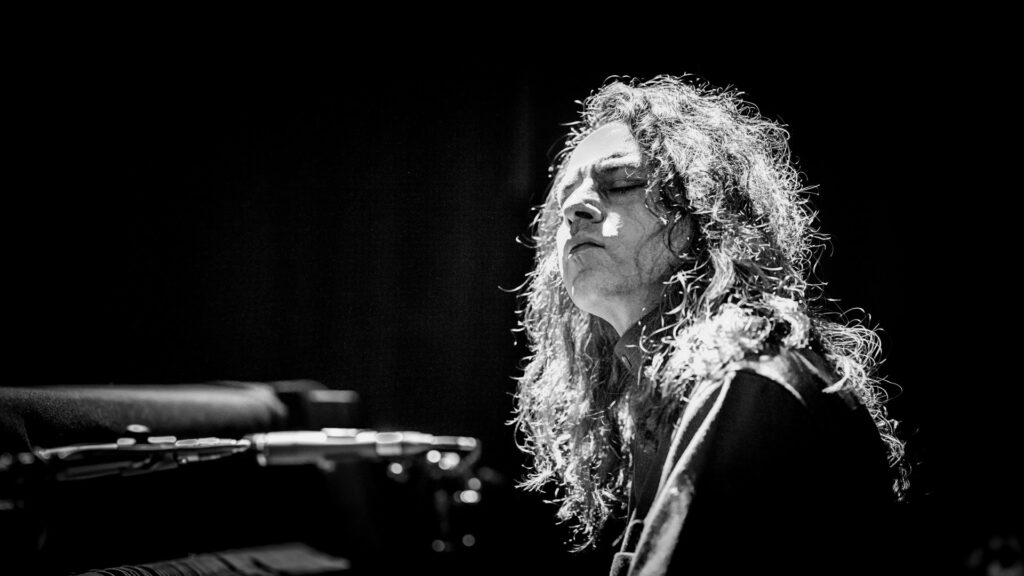
I usually like to start my interviews with broad and open-ended philosophical questions… In this case, I’d love to know whether you could ever imagine a life without music? Are you proud of how your career has developed so far?
For me, music feels almost like a platonic love bordering on obsession. Because of that, I’ve never really felt fully satisfied or overtly proud of where my artistic career stands; there is always more on the horizon, always more to learn, discover, and explore. I’ve always wanted to absorb more musical knowledge, expand my abilities, and push myself into unfamiliar territories. That constant pursuit has shaped my life in many ways, which is why I genuinely can’t imagine myself without music.
I also think many people simply haven’t yet been introduced to the right musical environment, or have drifted away from it because of life’s circumstances. Music is communication, expression!
Most of your career has been spent working on the fringe of popular and classical music, whether it’s an avant-garde, ambient piece or an orchestral-coded, cinematic cut. Do you find it interesting to explore where others haven’t, in aural terms? Has it always been this way? I noticed on your Instagram a mention of you being a metalhead in a distant past…
I still enjoy my dose of metal, although I’m probably less of a metalhead than I was some years ago. I think I’m currently in a calmer period of my life in terms of listening habits, but the intensity and aggression that drew me to metal still find their way into my music, just through different textures, dynamics, and instruments.
I see myself as a musical nomad, both as a listener and as a creator. I’ve always found it difficult to limit myself to a specific genre or expectation, and that has sometimes made introducing my work to people a bit complicated. The human brain naturally wants to categorise things, to place them into neat shelves and boxes, and that’s very understandable. But creatively, I’ve never really operated that way.
Enough chit-chat! Let’s focus our attention on ‘3 Pieces From An Old Statue’, your latest record. In it, we are met with a wealth of hypnotic, haunting soundscapes, a functional hybrid between neo-classical virtuosity and ambient textures. That’s not a journey you have endured by yourself, instead enjoying Özge Ürer, Dov Waterman and Thomas Nordmark as creative companions. The main motif is actually borrowed from a previous version of the same piece. What pushed you to work on a new version of it?
Creating orchestral or classically oriented music with samples often leaves me with the feeling that the work is unfinished. That was one of the reasons.
But the deeper reason behind An Old Statue Reimagined was my desire to continue chasing the emotional core of the original piece. I find these short and also long-term emotional pursuits in music increasingly rewarding. Around the time we were releasing The Oracle music video, which I shot in Istanbul with my longtime collaborator Özge Ürer, I asked her to record some almost ritualistic vocal lines to replace the vocal samples in the original version. She came back with these beautiful, layered improvised takes, and that became the true starting point of what you hear now.
From there, I felt compelled to go deeper into the feeling of the piece. Once the reimagined version reached its current form, I invited Dov Waterman and Tomas Nordmark to create their own interpretations. I see that process almost as a conversation: “Here is this emotional world, what would you hear inside it?” I’m always curious to discover what another artist might reveal through the same material.
Did you have any say in the two remixes by Waterman and Nordmark? Do you find them interesting from a sonic perspective?
I love these people deeply; they are close friends, incredible artists, and musicians whose work I genuinely admire and respect. Collaboration, for me, is never random. I choose to work with people because I trust their artistic instincts and believe they will bring something meaningful and unexpected into the process.
That’s true not only for other producers and composers, but also for the musicians I record with. I’m interested in what others can bring into the exchange creatively, so I rarely feel the need to micromanage anyone. If I have a strong direction in mind, I might share a loose brief or emotional starting point at the beginning, but after that, I prefer to let people respond freely with their own artistic voice.
As mentioned previously, your work is deeply intertwined with visual images; do you find yourself mostly writing to a specific mood? Do you seek to push a specific message or a unique mood?
When I compose, I usually write from a place of emotional overload. I try to locate the emotional core of a feeling and amplify it through music. Maybe that creates some kind of feedback loop in my life.
Recently, during a composers’ meetup at my studio, I found myself openly admitting that my music is often driven by drama and emotional intensity. I think that’s probably true. Even when the music becomes quiet or restrained, there’s usually an emotional tension underneath it that I’m trying to explore.
Writing for visual media is slightly different. In that context, you are serving a narrative as part of a larger team of creatives who are equally invested in the work through their own craft, whether it’s a film, a game, or even an advertisement. There’s something deeply satisfying about delivering what the project needs when the team connects with your contribution and your voice adds value to the final piece.
Tell us about TimbreWorks studios; is that where you spend most of your day? Are there any interesting artists emerging from its label?
Yes, I’m at TimbreWorks almost every day… creating, practising, recording, producing, or working on releases. At its core, TimbreWorks is a music production studio focused mainly on music for media such as film, television, and games. We are based at East London’s creative hub Trinity Buoy Wharf, home to London’s only lighthouse.
Calling it a label sometimes feels like overselling it a little, but in practice, that’s what it has gradually become. Most of the releases connected to TimbreWorks are collaborations and projects that emerged naturally within the walls of the studio. Over time, as we began releasing music through Bandcamp and other platforms under the TimbreWorks name and sharing these projects more publicly, it slowly evolved into something resembling a small independent label.
Lastly, I’d love to pick your brain… if there was one piece of advice that you could offer to any aspiring artist or producer out there, what would that be? Keep in mind that many of our readers are fellow creatives themselves 🙂
Chase your ideas. Most of the time, the biggest limitation is ourselves.
You don’t need a room full of expensive gear to make music; you need ideas, curiosity, and the willingness to bring something personal into the world. Music-making is ultimately a form of expression. Most of the time, it can feel like you’re shouting into empty rooms or dark alleyways, but occasionally, others hear your voice, and a communication starts. Those moments are incredibly valuable, but at its core, it’s the dedication to the creative process itself that makes everything worthwhile.