


Entering Kim Vestin’s aural universe is akin to entering a blissful, transformative space, an angelic and cinematic dimension steeped in meaningful lyrical allure and bucolic production. Now based in Stockholm, the talented songstress draws from her Northern Sweden roots to deliver a rather expansive and elegant sonic palette, one that’s supercharged by Kim’s nuanced, luscious vocals. Part intimate and part hypnotic, Vestin’s tone is a heartwarming slice of tenderness, a precious quality in today’s gloomy world.
Accompanying the Swedish creative in her artistic journey, we find her musical partner and producer, Love Sivik, helping bring ‘Phoenix’ to life. Recorded at the couple’s home studio, the album offers eight wonderful pieces ranging from orchestral, anthemic, and grandiose cuts to folk-leaning, more sombre episodes. Lyrically, ‘Phoenix’ seeks to explore the fine line between reality and desires, as Vestin reckons with constant evolution and rebirth.
Intrigued by the project, we caught up with Vestin to learn more about her artistry and future goals… Interview below!
Hey Kim, thanks for chatting with us! Congrats on the debut album, ‘Phoenix’, it’s a wonderful milestone. Looking back at 2025, it really has been a crucial year for you and your music. How does it feel to finally share your art with the wider world?
It’s technically not my debut! I released an album a looong time ago, before releasing music was as easily accessible for indie artists as it is now, before the Spotify era. It only exists in physical format in the homes of the people who bought it. And in my mom’s attic, haha. Also, I wouldn’t really call it a studio recording. I remember recording the vocals in my friend’s closet. Which turned out surprisingly well! But I would say ‘Phoenix’ is my debut in the sense that it’s my first professional studio recording, even though parts of it were made in our home studio. It feels really good to let it out into the world.
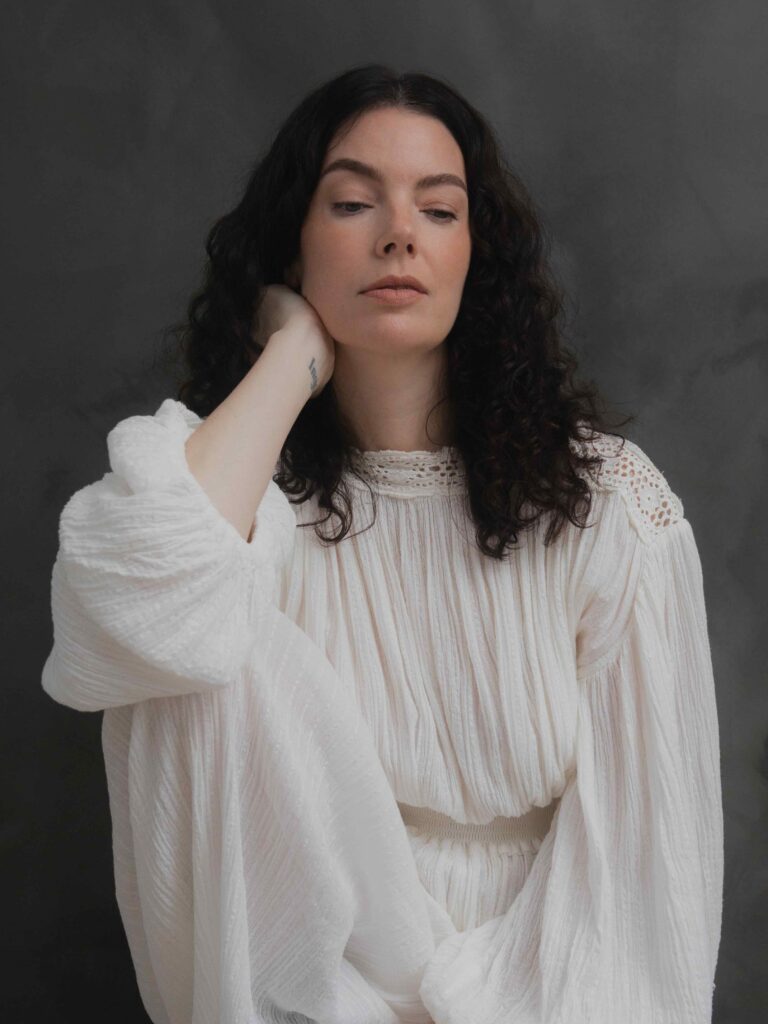
I read about your rural roots in Ångermanland (North Sweden), and after seeing a few pictures of the region, it’s easy to imagine how such bucolic imagery might influence your overall artistic ethos. Is that just a cliché on our part, or do you actually draw inspiration from the wondrous natural landscape around you?
I think the vastness and emptiness of my surroundings growing up definitely influenced my musical style, how I sing and write and what type of soundscapes I’m typically drawn to. There’s something very grand about the landscape in Ångermanland, which I definitely think I’ve brought into my music.
The album itself is incredibly expansive and cinematic, carrying a great deal of aural and lyrical escapism. I am sure its creation took time – how long have you been working on it? Other than Love Sivik, are there any other collaborators we should know about?
Even though some of the songs were written a long time ago, I would say we started working on them about three years ago, recording demos and finishing songs. Collaborating with other people has actually been the best part of this experience. Since I don’t have an established band where I’m living at the moment, we used several different musicians for the album, two drummers (Ossian Ward, Fredric Holmberg), three guitarists (Oscar Björk, Alexander Grönlund, Gustav Alte) as well as synth-player Albin Johansson, experimental electronic musician Roman Gens and amazing horn-player Albin Grahn.
It’s been such a luxury having these talented musicians add their ideas to my music. Other than that, we also had amazing help with mixing from Simon Nordberg, and had a great mastering experience with Hoffe Stannow at Cosmos Mastering.
Delving into the specifics behind ‘Phoenix’: are there any recurring lyrical themes in it? Would you define it as an introspective work?
Definitely, yes. Though the outside world often inspires me, I would say I spend most of my time dwelling in my inner world, ruminating and daydreaming, at least when I am allowed and no one is bothering me. So, a lot of my lyrics are really me talking to myself, and I tend to think about them kind of as sermons.
On ‘Phoenix’, there are recurring themes of death and rebirth, of escapism and longing for something else. I wouldn’t say it was planned, and not all of the tracks conform to these themes either, but somehow they often find their way into my music. It probably tells you most of what you need to know about me – that I am rarely satisfied with my current place in the world, and spend a lot of my time longing for something else…
There’s a constant push-and-pull between oblique folk matter and brighter, heartwarming pieces throughout the album, a feature that makes it quite eclectic and vivid. I am sure you are proud of all of the songs in it, but I am wondering if there’s one or two special tracks that you are particularly excited about?
There are. ‘They will never find you’ is one of them. I wrote it kind of as if I’m talking to myself as a little child, when I was small and alone and longing to be far away from where I was. I’m really in love with how we managed to blend the organic, acoustic elements of the track with the dreamy but also sort of Daft Punky electronic elements; it’s probably one of the most eclectic productions on the album.
My other favourite is ‘Save your goodbyes’, which I think is the track where everything kind of fell into its perfect place. There are so many aspects of music, there’s the song itself, there’s the instrumentation and arrangement, the vocal and instrumental performances and the sound mix. Usually, one or two of those aspects end up just a bit off course, but with that one, everything is exactly as it should be. That’s a rare feeling, and I’m really happy I get to have it.
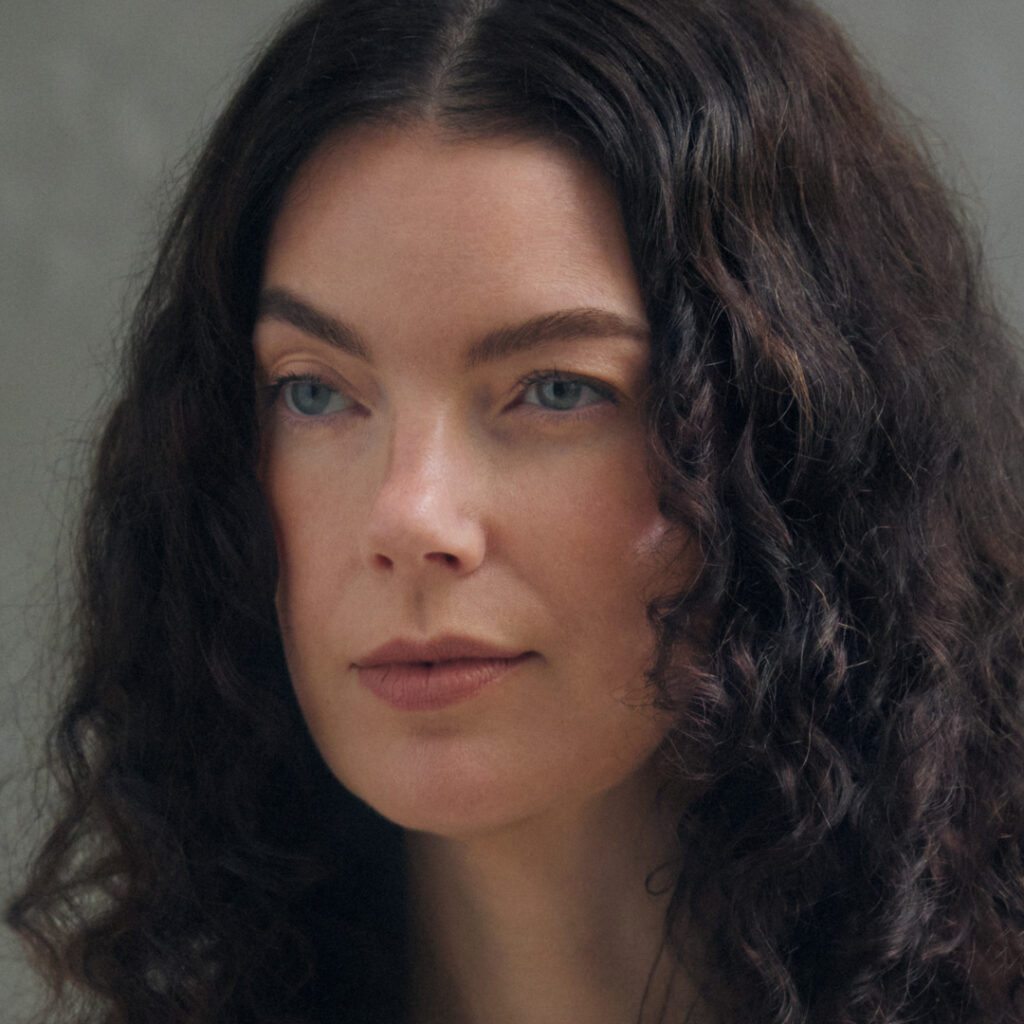
Your vocal tone is incredibly beautiful: precise and purposeful, yet malleable and dreamy. Where did you learn to sing so well? Widening the question, what first motivated you to pick up music as an activity?
First of all, thank you! I’m really a nerd when it comes to singing. Basically, nothing makes me happier than listening to a really good vocal performance. My father, who wasn’t really around during most of my life, was a singer, and I would actually say he was my first vocal coach. He taught me to sing really difficult songs, like soprano pieces from musicals such as ‘Phantom of the Opera’, and power ballads by artists like Celine Dion.
I was probably around 9 or 10 when I started performing live with him. So I would credit him for my discovery of singing and of music in general. However, I came to love singing and wanted to do it for a career during high school, when my vocal coach introduced me to the record ‘Blue’ by Joni Mitchell. That was really life-changing for me. I listened to it on repeat. It really helped me discover the limitlessness of what singing and songwriting can be.
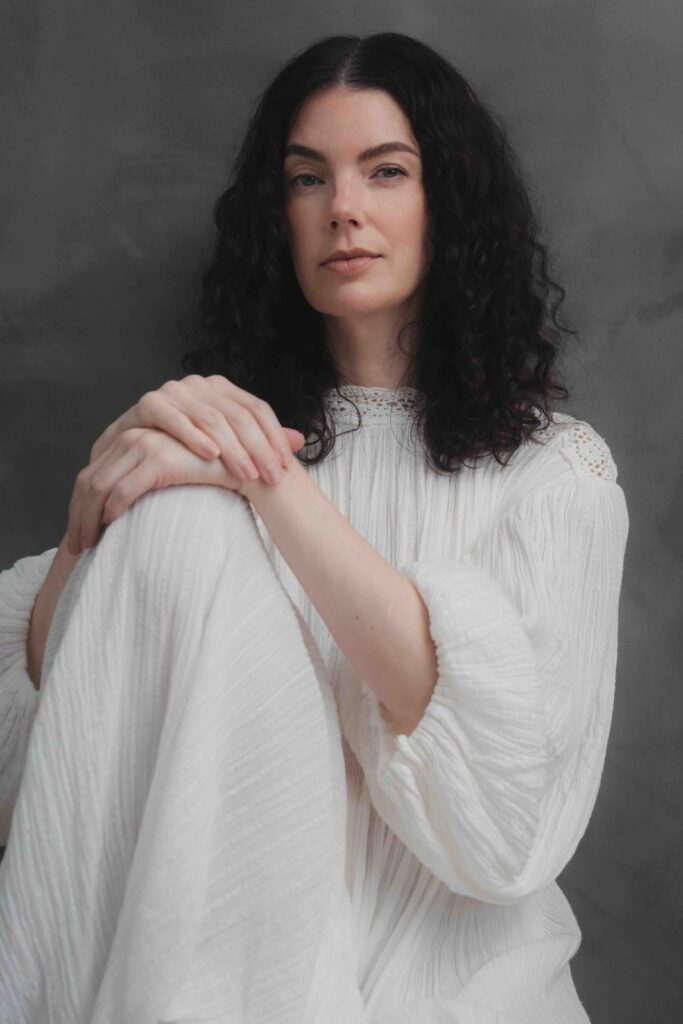
Pursuing music while raising children is something that’s not often talked about, but I believe that’s an important conversation in this day and age. How do you manage to balance family and creativity? Would you say that being a mother changed your lyrical outlook and the way you approach the world around you?
Hm, I wouldn’t say there’s balance. Finding time for creativity is more of a daily struggle and a constant cause for frustration. That probably sounds depressing, but it’s not like I would have it any other way. I wouldn’t trade my children for more creative time, and I simultaneously would never be able to give up my creative work just because it’s straining in the sense that I rarely find enough time to rest and relax, or to keep up with my social life outside of my family.
Being a mother has absolutely changed me to the core. It’s made me take myself way less seriously, which I think is a good thing in life. As an artist, I’m unsure if it’s a positive. I think one kind of needs to be a bit grandiose to get up on a stage and expect people to want to pay attention. And so I actually try to keep as much of my egocentrism as I possibly can. Maybe it’s changed my lyrical outlook in the sense that I used to write more dramatically, using strong imagery, while now I think I write a bit more directly, using simpler language to get to the point.
Here’s a question I often ask: given your own unique journey in music, is there a particular piece of advice or nugget of wisdom you can share with any up-and-coming artists and songwriters out there?
Have fun and be brave! I really think that’s the best advice. It’s so easy to let performance anxiety and perfectionism get the best of you, and to forget why you are performing, which obviously is because you need to, because it makes you the happiest. So don’t take that away from yourself.