


Thematic records are a rare discovery nowadays; everyone seems to prefer bite-sized releases targeted towards fast consumption and mundane topics. Yet, from time to time, we do feel the urge of immersing ourselves in a deeper musical place, perhaps a longer album or a saga-coded catalogue. Well, ‘Temperament’ fits the brief rather perfectly, a nine-track LP that functions as the meeting point between blissful, dreamy electronica and abstract philosophy. It’s an offering that’s a joy to listen to, one that will also spark witty reflections.
You see, ‘Temperament’ is more than a triumph of avant-garde sonic energy and ambient textures. Written and produced by British creative Chris Ami, the album embarks on an aural analysis of psychological and emotional states, drawing from contemporary philosophy (a sample of an Allan Watts lecture serves as the album opener) and from our complex reality, a time when many folks seem to be looking for deeper meaning and a higher state of consciousness. We suspect it’s quite relatable.
Intrigued by Ami’s encompassing artistry, we caught up with the talented musician and DJ to learn more about his personal history and the motivation behind ‘Temperament’. Interview below!
Hi Chris, thanks for chatting with us! I have spent some time cosying up to your debut album, ‘Temperament’, a heartfelt and eclectic journey through electronica, ambient, and leftfield influences. There’s a precise ethos behind the record, a feature that makes your current endeavour rather unique and meaningful.
With each track ‘inhabiting a different psychological state’, I’d love to know what came first, the overarching philosophical theming, or the music itself? Did you write the album to a specific brief?
Hi Gab! Nice to chat to you too, and thanks for listening to my album and writing this piece.
The concept and the music grew together. The philosophical framing came after I’d written ‘Hubris’ and a few other tracks, and then I noticed a pattern in what I was making. I wasn’t sitting down to write “an album about psychological states”, so to speak. Instead, I was processing everything in parallel. At some point, I had about six tracks finished, and I thought, “these all feel like states of mind”. That’s when the one-word naming convention clicked, and suddenly the album had a spine; I wrote three more tracks with intent, and completed something that felt coherent from end to end. The brief was retroactive, in a way.
Delving deeper into the same subject, is there a particular reason why you have embraced such a comprehensive philosophical ethos? I guess that didn’t just happen in a vacuum; do you hold a keen interest in philosophy and human nature?
I’ve always been drawn to thinkers who grapple with consciousness and perception. Alan Watts is an obvious example of that; the reason why having his voice on ‘Hubris’ felt earned rather than decorative. There’s something he talks about in terms of how we construct our sense of self and reality that maps directly onto what I was trying to explore with this album. The psychological state framing wasn’t a concept I imposed from outside: it was the natural language for what I was already feeling my way toward.
I think electronic music in particular invites this kind of thinking. When you’re working with synthesisers and texture and space, you’re not writing lyrics that tell someone what to feel; you’re creating conditions for feeling. That’s endlessly interesting to me. Music has always been, as I’d put it, a way to feel and to make others feel. Philosophy is just me trying to understand why that works.
If you had to outline a general listening guide for ‘Temperament’, would you recommend consuming the tracklist in its current order? Is there anything you’d like listeners to take away from the album at large?
I would recommend respecting the provided tracklist at first. The album moves from a place of ego and overreach: ‘Hubris’ is deliberately the entry point for a reason, through tension, introspection, and gradually outward toward something more open. ‘Drift’ at the end is intentional; it’s not a conclusion so much as a release. If you listen to the record on shuffle, you’ll still find things you like, but you might miss the overarching narrative arc.
Let’s take a step back from the record; I’d love to know more about your upbringing as a music producer; who’s Chris Ami, really? Are there any particular artists or albums that have inspired you along the way?
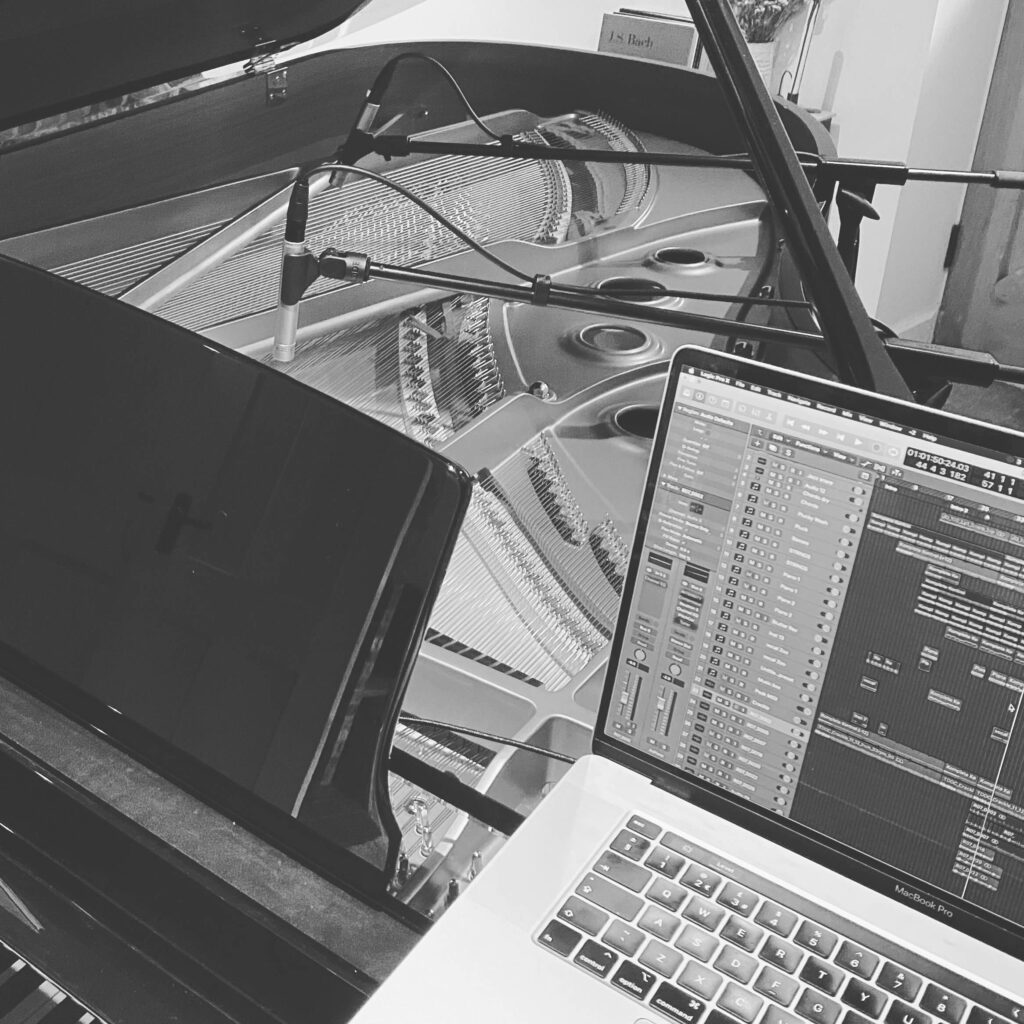
I played piano when I was a kid, and that’s definitely the start of it all. I then was a semi-pro club DJ for a decade or two. It’s fair to say that most of my life I’ve been absorbing, learning, deconstructing and reconstructing others’ music. I started producing my own music maybe ten years ago, but have lived with a lot of creative insecurity in that time, and it’s taken a lot of work and guts to get this album out. In terms of influences, think Bonobo, Jon Hopkins, and Burial, but also contemporary composers such as Nils Frahm and Max Richter. People who don’t treat the boundary between electronic and acoustic as fixed.
Now, we could talk about music tech for hours, but let’s take it slowly; what’s your creative process like? Do you work with any analogue machines? Do you always know where you are going (from a sonic standpoint), or do you enjoy adventuring into casual jamming?
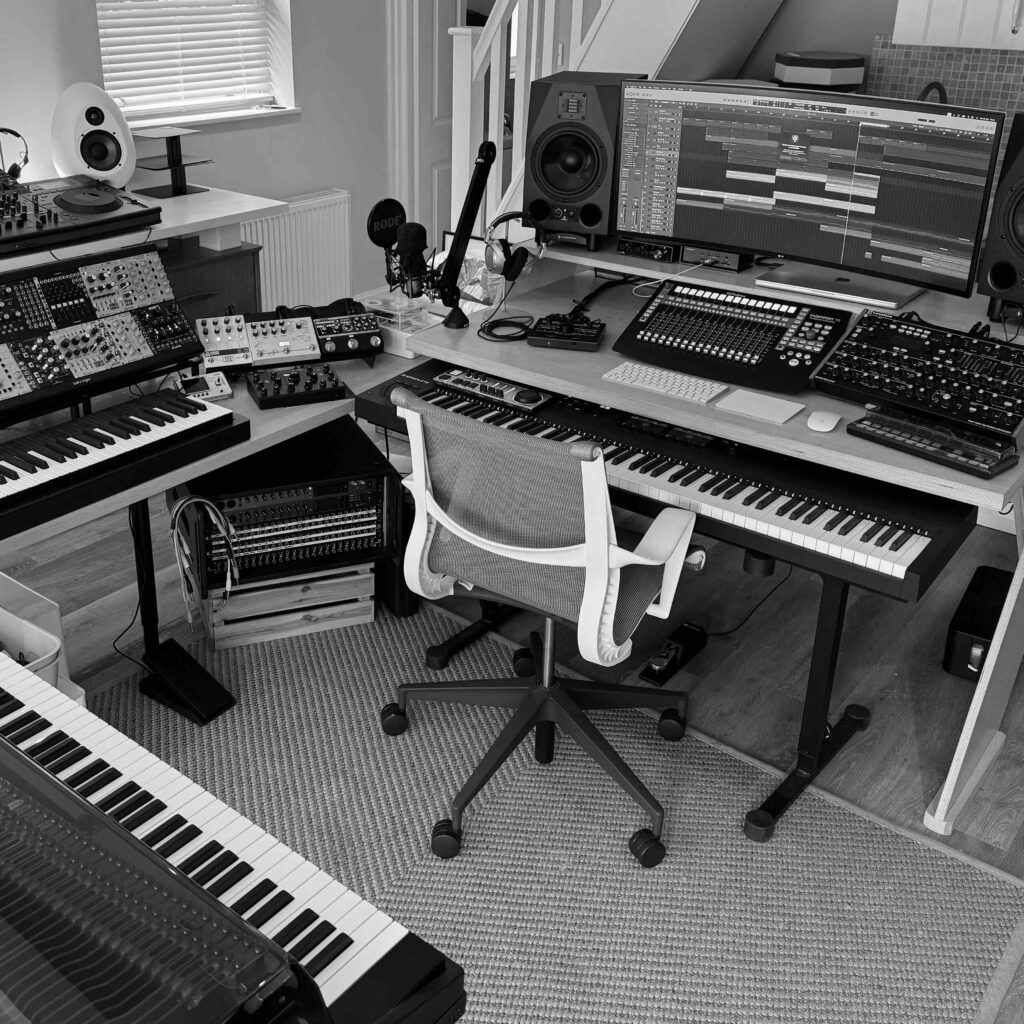
I’m definitely not a big jammer. I tend to have a feeling or an image in mind before I start, and I usually start with texture before melody. I love finding a sound that has the right emotional grain to it. Sometimes, I’ll start with a chord progression and work from there. I do use some analogue gear, but I’m not precious about it; if an instrument plugin does what I need and gets me to the sound I’m looking for quickly, that’s fine. I prefer to work fast and move from sketching an idea to a full arrangement as quickly as possible. Such an approach allows me to avoid the loop trap while identifying an overall shape and structure, which can then be refined later.
Most importantly, how do you know when you are done with a track? A lot of folks out there struggle with this; a constant push for perfection that can sometimes really hamper one’s creative juice. With ‘Temperament’, how long did it take you to write and produce the album?
Booking an attended mastering session was the thing that finally made it feel finished. There’s something about handing something to another set of ears in a professional context that forces a kind of closure. Before that, you can always tweak. With ‘Temperament’, the writing was spread across a couple of years, but the actual concentrated push to finish it (sequencing, mixing, final decisions) was much more compressed, and having a committed deadline has definitely been a good thing. Granted, I probably could have spent another year on it… There are still many things I’m not happy with, things I know I can do better… but at a certain point, you have to just accept that it will always be the case. That’s when you have to stop overthinking and share your work with others. Everything learnt in the process can be used to improve your next track.
Fellow producer Tom Eno is featured on ‘Flow’; was there a reason behind the collab? Also, I noticed you also go by the ‘Soultonic’ moniker; is that an old artist name, or do you use it for different releases?
Tom and I have been friends for years, and he’s released some successful music in the past. His sensibility fitted ‘Flow’: I needed another pair of ears and some influence in the production, as it had reached a point where I couldn’t be objective about it. As for Soultonic, that’s my previous artist name, and before that, it was the name of a record label and a club night centred on Soulful and Deep House music, so it just didn’t fit me anymore. Releasing under my own name Chris Ami (my real name is Chris Anthony Micklethwaite), feels somehow more honest.
Do you still DJ from time to time? I was happy to find a mix dating back to 2003 on your website (we’ll link it below), a little historical nugget for any deep house and chillout lover. You certainly have been doing this for a long time…
I still DJ occasionally, yes, though much less than I used to. That 2003 mix feels like it’s from another lifetime, but I’m glad it still exists. It’s a document of what was exciting to me then, a chapter in my life, with some of those influences still audible in the music I’m making today.
Lastly, what’s next for Chris Ami? Are you performing/gigging anywhere?
What’s next? Keeping it all forward-looking but grounded. I’m focused on getting ‘Temperament’ out into the world properly. It has some cinematic elements, and there are some sync opportunities in progress. But there’s also more material taking shape; the one-word emotional vocabulary of ‘Temperament’ feels like it has more to say, so watch this space…!