


We approach Aliénore’s aural universe with a certain reverence and respect. You see, the Berlin-based French-British singer, songwriter, and musician is not your average artist. Far from it. Occupying a sonic and creative space that’s sacred, cinematic and rather haunting, the talented songstress uncovers a wealth of hypnotic and introspective textures, all the while delivering enchanting, cathartic vocals steeped in cathartic lyricism and researched imagery. ‘Mirage’ is the perfect evidence of that.
Marking the project’s latest effort, the EP sees Aliénore engaging in elusive and nocturnal material, with leftfield soundscapes and fringe electronica blended in an obscure, yet dreamy marriage of intents. The listening experience is disorienting at first, and perhaps quite challenging, as the gifted Berliner envisions an alternative sensorial path for us. Yet, once we totally surrender to the material at hand, a floating sensation quickly arises, wrapping listeners into a healing, mercurial sonic bath.
Intrigued by what we have heard so far, we have caught up with Aliénore to learn more about her overall artistry and personal circumstances… Interview below!
Hey Aliénore, thanks for chatting with us! ‘Mirage’ is the record that brings the project to our attention, and it’s a good starting point for this interview. I appreciate the nuanced sound design behind it: truly cinematic and ethereal, but also intense when it needs to be. Your vocals feel both heavenly and haunting… how do you balance escapism vs. meaningful lyricism? Does the record need to be felt, or understood?
Both. I would say that the record needs to be both felt and understood, depending on the track, of course. I’d say that escapism allowed me to create meaningful lyricism in this record, and I strived to create a balance between more emotionally intense songs (lyrically) and more descriptive and visual tracks.
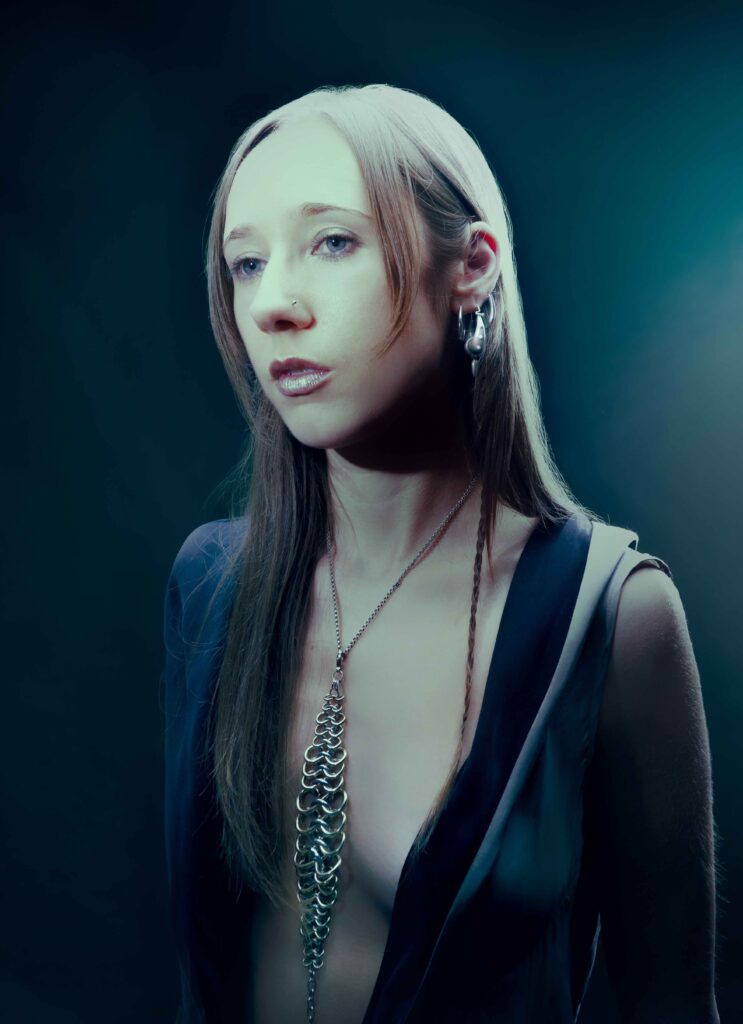
Diving deeper into the ethos behind the project: Is there a common theme in the album? Would you define your songwriting as introspective or descriptive?
This EP is about duality, and I think that theme comes out in most of the tracks in different ways. Compared to my last EP ‘Métamorphose’, which was highly autobiographical, this body of work has some fairly personal tracks (‘Solace’ and ‘Chimaera’), which I’d say are more introspective, but the others are dreamscapes, musings and more descriptive tracks. Songwriting is usually a very visual process for me, where I can literally see the world that I’m building whilst writing the lyrics or during the composition.
It’s quite clear to me that Aliénore is truly a holistic effort, in creative terms. Are there any other art media that have caught your attention? Is there a specific inspiration behind the project’s worldbuilding endeavour?
With a background in fashion, I’d say that the costumes and aesthetics sides of the project are very important to me and to the understanding of the music. But I also get very inspired by film, art, architecture, dance, etc. I do consider the project to be more than just music, so I spend quite some time working on the visual aspects of the project too.
Your roots are French and English, yet you are now based in Berlin, Germany. I’d be keen to know whether such an eclectic cultural background has had any effect on you and your art? Has your overall outlook changed because of it?
Absolutely. I think it is a key part of the music. Moving to Berlin has played a huge role in being able to produce this kind of work: collaborating with like-minded artists from all over the world (and from different disciplines, not just musicians), giving me the space to experiment and to be able to build my own niche when you don’t fit into other scenes. On the other hand, my upbringing in the rural French countryside is a huge inspiration to my work, and it remains the place where I write most of my music. Additionally, growing up with British parents and living in the UK for some time has connected me to my pagan roots and to the dramatic & moodylandscape of the UK.
On the same theme, would you say that growing up in a rural area has allowed you to connect with nature on a deeper level? Does such a connection find its place in your music?
Nature has a central role in all of my compositions. For me, it’s a place where I can feel myself fully grounded. It’s humbling. When I’ve been in the city too long, I crave being in nature. I also find it an incredibly inspiring place to songwrite and compose, for instance, when going on forest walks. Recently, I’ve also been using small rural chapels as places to compose, sitting on the floor with my mic, the beautiful natural reverb, my keyboard and laptop. Nature certainly finds its way into my music, and I think it’s at the backbone of it.
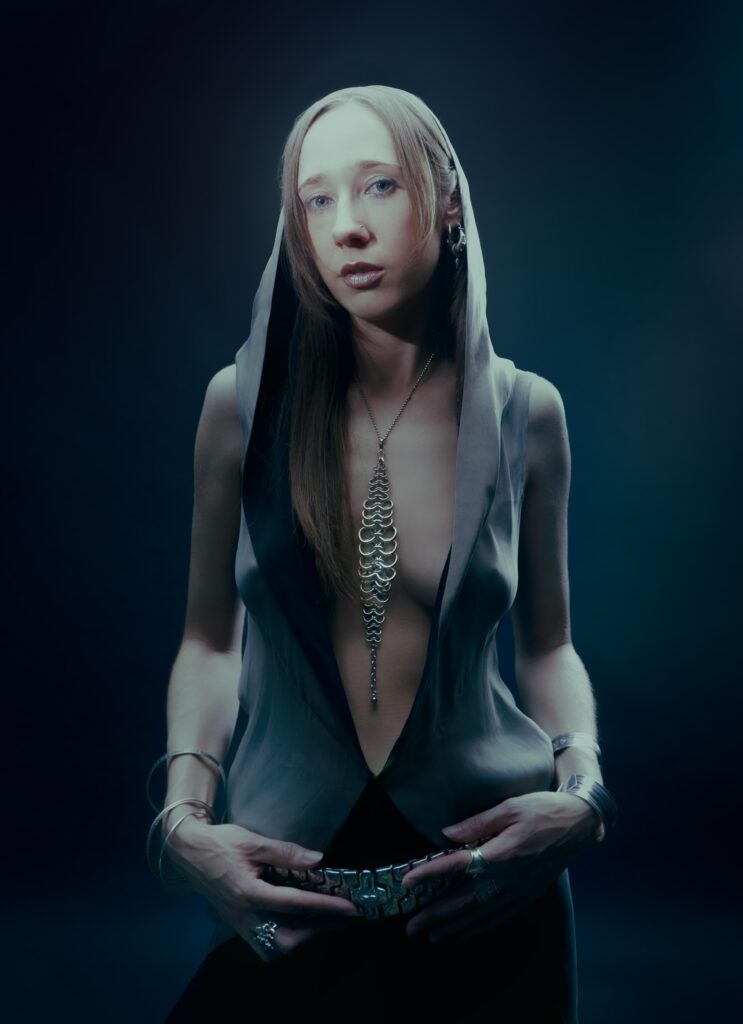
Taken from the album, ‘Lilith’ ships with a hypnotic, gloomy music video shot by an all-female/FLINTA* production crew. What’s the key message behind such powerful visuals, and is there anything you can tell us from that experience as a whole?
The experience of making the Lilith music video was super special. We shot it spontaneously in 2-3 hours on a winter’s day in a small studio in Berlin with an all FLINTA* crew from the collective Chaos Emblematic – a multi-disciplinary arts collective that I’ve been part of since 2023. Directed by collective founder & leader Brit Angus, the video is about duality, with dancer Gigi DiGirolamo playing Lilith – my alter ego. The video explores themes of seduction, of the dark feminine and celebrates duality and the complexities of the female experience.
Briefly, I’d love to know what motivated you to pursue music in the first place, and the transition between singing in classical choirs vs. embracing a more experimental ethos. Perhaps the two are not so distant as one might think?
Though I always sang in my upbringing, and music was very present in my life, I came to composing and writing my own music rather later in my life. I had always felt that something was missing or needed to come out, but fear held me back. It’s only when I moved to Berlin 5 years ago that I was able to start exploring this side, and I’ve never looked back. And, regarding classical music VS experimental, I think that classical music can be a great grounding for being able to later break free and explore more experimental music and composition.
How are you finding Berlin as an artistic home? It looks as though you have rallied a like-minded community of creatives around you and the project!
It’s been a blessing and an inspiration! It’s an ever-changing city constantly shaped by the people who are living and creating within it at that specific time. For me, it’s been a great environment to build something unique.
Lastly, a question that I often ask. Looking back at your journey in the art field and within the music industry, what’s the one thing you learnt that would be worth sharing with our readers? Perhaps a particular piece of advice, or a nugget of wisdom that can inspire any like-minded readers out there…
I would say I have learnt to enjoy the process of creating rather than getting to the “finish line”. Putting out an authentic body of work can be messy and full of ups and downs, so you have to remember why you’re doing it. Additionally, I try to remind myself of the importance of staying true to oneself and listening to one’s own voice and intuition, especially in a tough industry that may not be on your side a lot of the time. We all have our very own path, and the beauty is that it will be different for everyone. So I try not to lose sight of that!