


Receiving a new record from Mortal Prophets is not an unexpected move anymore. What instead surprises us is how good it is. You see, New York City-based musician and songwriter John Beckmann has showcased incredible productivity over the past few years, releasing a plethora of albums across a vast variety of genres. Neither the lyrical quality nor the compositional allure of the project ever let us down once; that’s how talented Mortal Prophets is.
Recently, the project has returned with a brand new album, ‘Not Here Not There’. The LP follows up on ‘Hide Inside The Moon’, another long-length release unveiled earlier this year. This time around, Beckmann directs the vocal spotlights on fellow vocalist Tanner McGraw, here invited to lend his evocative and malleable vocals to the Mortal Prophets’ cause. From a sonic standpoint, ‘Not Here Not There’ feels eclectic and overachieving, a blend of crepuscular synths and spacious guitars with a keen leftfield edge.
Intrigued by the record, we caught up with Beckmann to learn more about his artistry and future goals… Interview below!
Hey John, thanks for chatting with us! I have been writing about your music for the past few years, and I have always admired your bold genreless ethos and your willingness to change and adapt to diverse aural settings. In fact, if I recall correctly, I came across Mortal Prophets in 2023, on the occasion of ‘Me And The Devil’, a blues and Americana-laden piece. Since then, you have been constantly evolving…
I am curious about what you are looking for in the music you do? Is it the need for personal expression? Or perhaps you let yourself be inspired by the present moment?
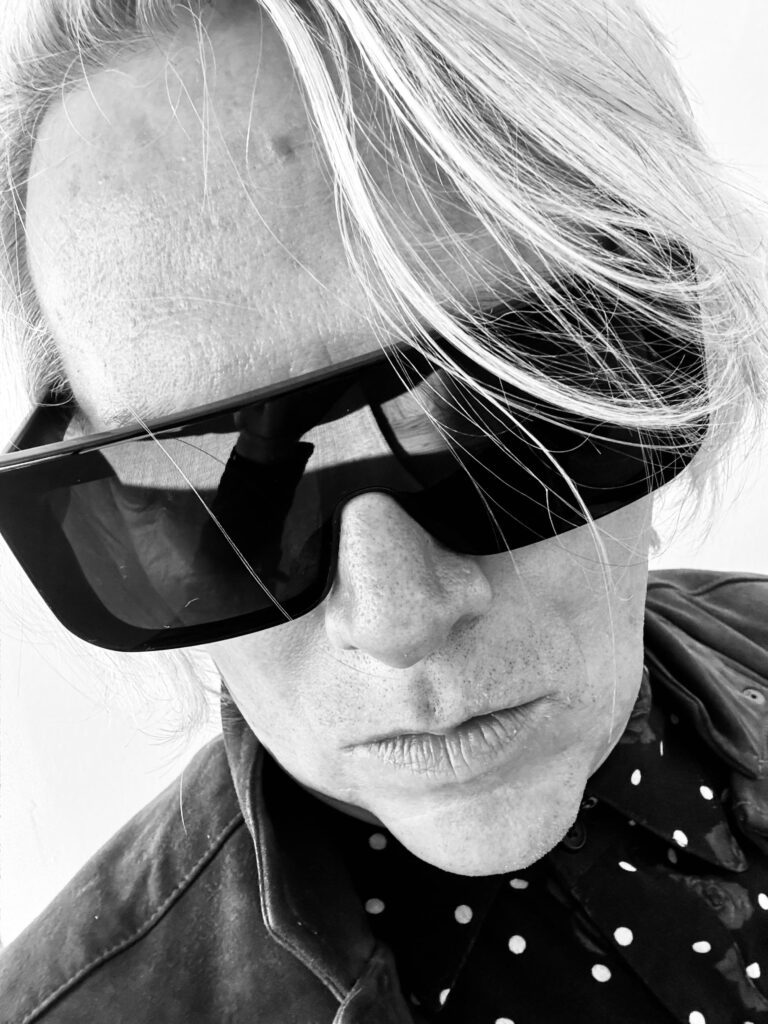
I think… if you find what you’re looking for, you should probably stop. The looking part is the whole thing, isn’t it? ‘Me And The Devil’ was just me pointing a camera at something that caught the light in an interesting way. Blues, Americana… those aren’t really genres to me, they’re surfaces. And surfaces are fascinating for exactly as long as they’re fascinating, and then you move on to the next one. I never really plan the evolution. I just notice when something stops being interesting, and start walking toward whatever it is.
It’s like a camera, actually. You point it and point it, and you never really see the thing… You just keep getting these beautiful accidents. I think I’m collecting accidents.
Off the back of my previous question, I’d love to know what music means to you… I am aware that this is a very open-ended topic. Let’s focus on why you choose to continuously release music: Does it make life more meaningful? Do you find it comforting?
I think everybody should just keep making things and not worry too much about why. The why is a trap. You start asking why, and suddenly you’ve spent three years not making anything, just sitting there thinking about making things, which is the saddest possible situation.
Does it make life more meaningful? I don’t know. I think meaning is overrated as a concept. I think doing is the thing. You release music the way you breathe – not because you’ve decided breathing is meaningful, but because the alternative is genuinely unpleasant. The comfort comes later, quietly, when you’re not looking for it.
Perhaps it’s worth jumping back in time and getting to know young John Beckmann. Did you receive any formal music education in your youth? Is there anything or anyone that played a pivotal role in your deep love for music and the arts?
I didn’t study music, I studied design. I think the most important education is just… exposure. Being around things. People don’t talk enough about how much you learn just by being in the room where something is happening. Sitting in that room, absorbing it through the walls almost.
Formal training taught me certain things. But the real education was always more accidental, a record playing somewhere, a person who pointed the antenna in the right direction without even knowing they were doing it. Someone in my early life did that. Turned something on. After that, you just follow the signal and see where it goes.
‘Not Here Not There’ marks your latest record, an album where you have curiously chosen to step back from vocal duties, instead offering the role to Tanner MCGraw and Lawson Mars. Has this choice paid off in the end? I suppose it’s different to write for somebody else, rather than for yourself?
I always loved working with other people’s faces. Your own face gets boring, you know it too well, you’ve made all your arrangements with it. Someone else’s face is interesting. It has possibilities you haven’t exhausted yet.
I imagine voices work exactly the same way. Tanner and Lawson found things inside those songs that I never would have found myself, couldn’t have, really, because I was too close to the material. Too familiar with it. A different voice makes the words new again. That’s more exciting than doing it yourself, honestly. It’s exciting in the way that letting go of something is exciting. Terrifying and then suddenly very free.
What was your overall goal with the album? Do you have any favourites in the tracklist?
My favourite is always the one that surprises me most when I hear it back. There’s always one moment on a record where you think, “Oh, how did that get there?” That’s the one. I couldn’t point to it on a tracklist. But I know the feeling when it hits.
As for goals… I think goals are a little like the why question. Dangerous to spend too much time with them. I wanted to make something that felt genuine. Whether it achieved that is probably for other people to decide. I’m already thinking about the next thing.
From a lyrical standpoint, is there a common theme throughout ‘Not Here Nor There’?
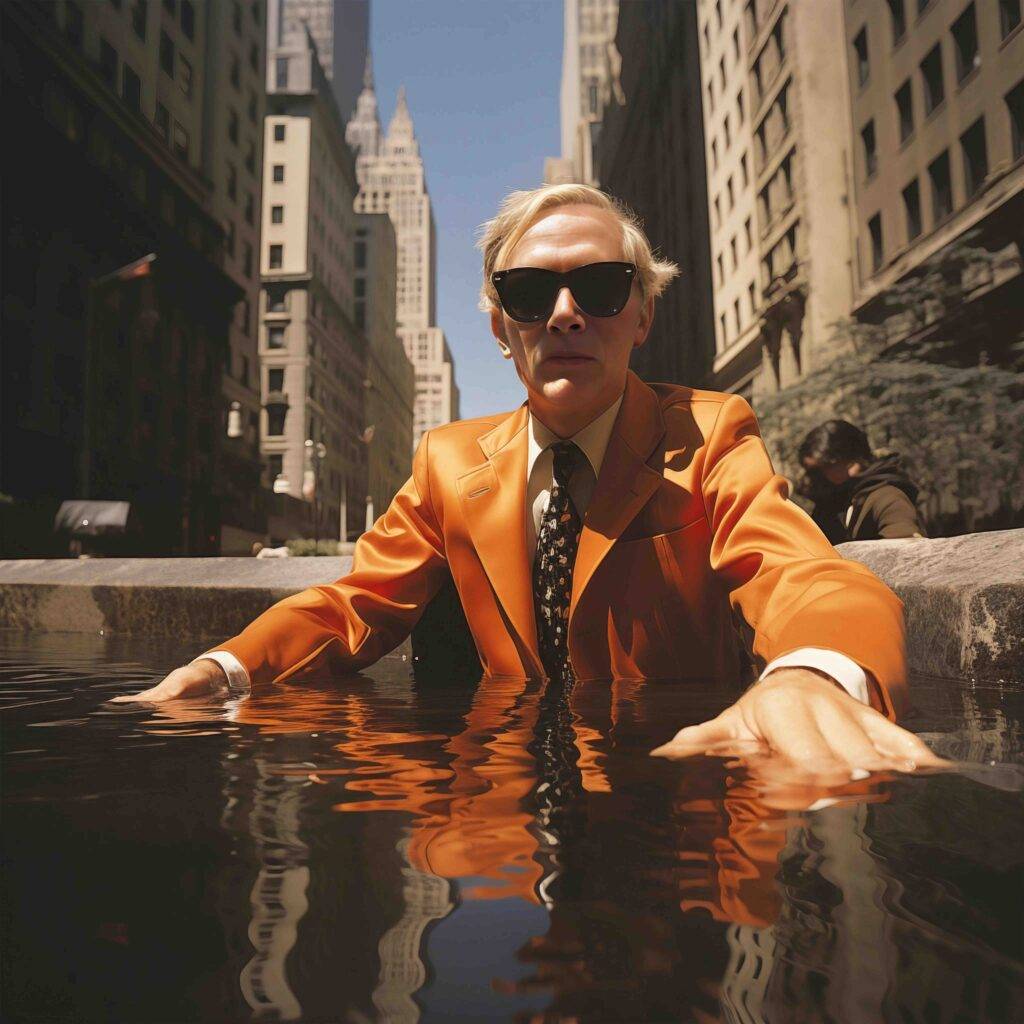
The title is the whole painting, really. That feeling of hovering just slightly above where you’re supposed to be. Not quite arrived, not quite gone. I find that condition very contemporary… very now. Nobody is fully anywhere anymore, and I think that’s worth looking at carefully, holding up to the light and examining.
The most interesting place has always been between things. Between now and later. Between here and somewhere else you can’t quite name. You can’t fully explain it, and that’s exactly why it needed to be an album. If you could explain it completely in a sentence, you wouldn’t need the songs.
How does your creative and production process unfold? Do you usually write alone or with others? Likewise, do you take an active role in the recordings?
I like having lots of people around and then going somewhere quiet to actually decide things. Life is always full of people, which is wonderful and necessary… that energy fills you up, gives you material, gives you friction. But the real choices always happen alone, in some quieter moment afterwards.
Writing arrives in solitude. Production is where the collaboration lives. And I stay very close to the recordings because I’m curious, I want to hear what the thing actually is as it becomes itself. Sometimes, what it becomes surprises you completely. Those are the best moments.
I am expecting future material from Mortal Propeths… where will you go next?
I think the next thing should be the most unexpected. People think they want more of the same, but they’re always wrong about that. They know they’re wrong about it, somewhere underneath. Give them something they didn’t know they needed yet.
New things are forming right now, half-visible. I’m looking at them sideways, the way you have to look at certain things, because if you look directly, they disappear. I don’t know what they are exactly. That’s the interesting part. That’s actually the only interesting part.