


There’s a great deal of evocative and nostalgic character in Impulse Nine’s artistic output. Hailing from Tucson, the talented guitarist and composer has recently unveiled a personal, introspective album, ‘NOTHING IS EASY’. Written as a reaction to tragic personal circumstances, the record feels intense and vibrant, jumping from furious hard-rock pieces to mellower shoegaze panoramas, and everything in between.
Simply, it’s a deep dive into Impulse Nine’s musical imagery. Always drawn to guitars and music making, the American creative never quite committed to sharing his gift with the world. It all now changes thanks to ‘NOTHING IS EASY’, rekindling the project’s deep aural fire. Overall, the album is complex and nuanced, and it deserves its own listening time. It needs to be digested and understood; it will likely not appeal to everyone. Yet, curious and bold listeners will certainly find solace and comfort in it.
Intrigued by the project, we caught up with Impulse Nine to learn more about his artistry and future goals… Interview below!
Hey Impulse Nine, thanks for chatting with us! Before we dive into your latest album ‘NOTHING IS EASY’, I’d like to get to know more about the artistic context behind the project. First of all, what motivated you to pursue music in the first place? Are there any artists or records that have played an important role in that?
Impulse Nine: I’ve never felt like I had much choice in the matter of whether to make music. For a while, I stopped because I didn’t see the point – I was just making weird little demos and didn’t have the time or inclination to do more, and certainly not the money or time to promote it, even if it were good. My wife said that I spiralled down so rapidly it was pretty alarming, and she pretty much shoved the guitar back into my hands and ordered me to continue for my own mental health’s sake, even if it was just to keep doodling.
I was fortunate to be introduced to the world of popular music through U2, who turned out to be maybe the best gateway band ever. They introduced me directly to blues, jazz, ambient, metal, hard rock, anime, classical, remixes, techno, opera, and more. The breadth of their ’90s output in particular is something I aspire to. Same goes for the Smashing Pumpkins’ work at that time; the 1930s ballad “My Blue Heaven” was recorded in the same sessions as the white-hot death metal track “Tales of a Scorched Earth.”
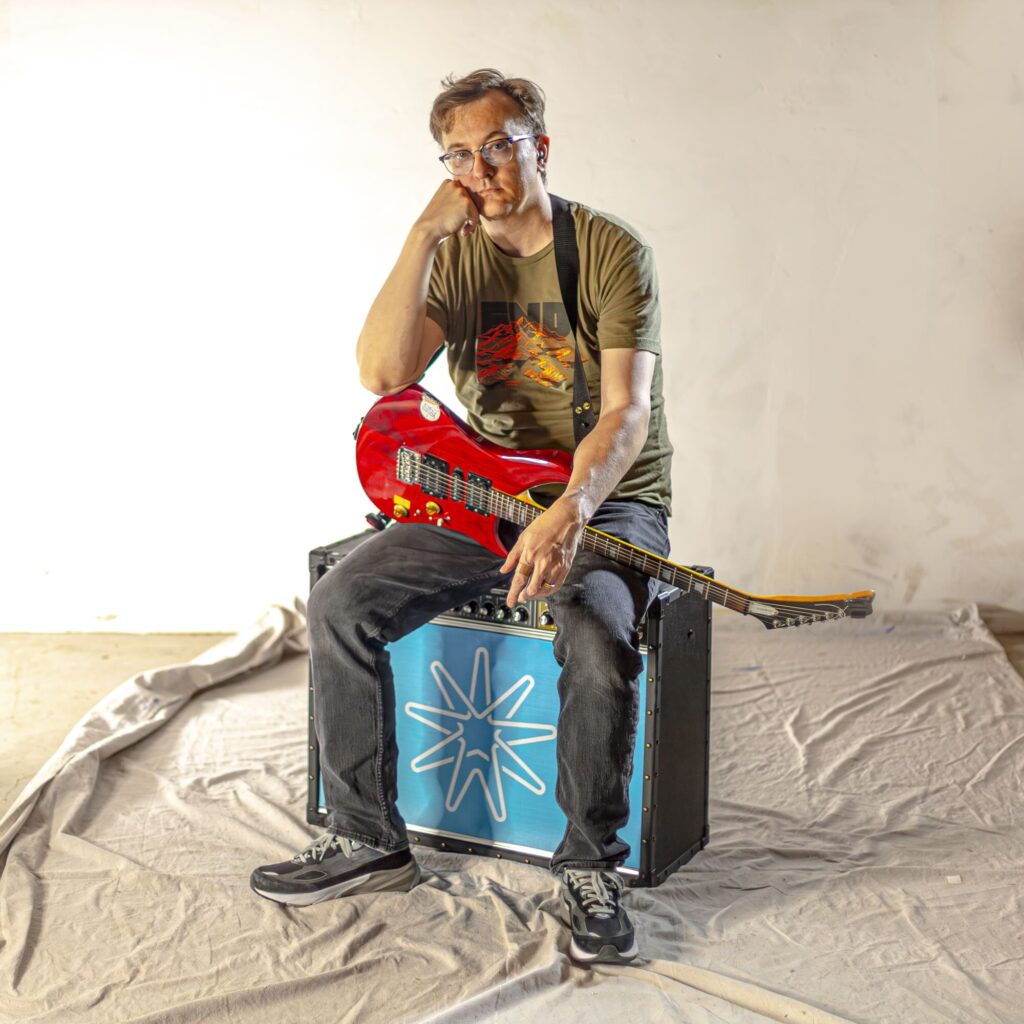
We can observe you playing guitar on the album; how much of a gearhead are you? Do you favour the overall artistic picture or the technical side of your instrument?
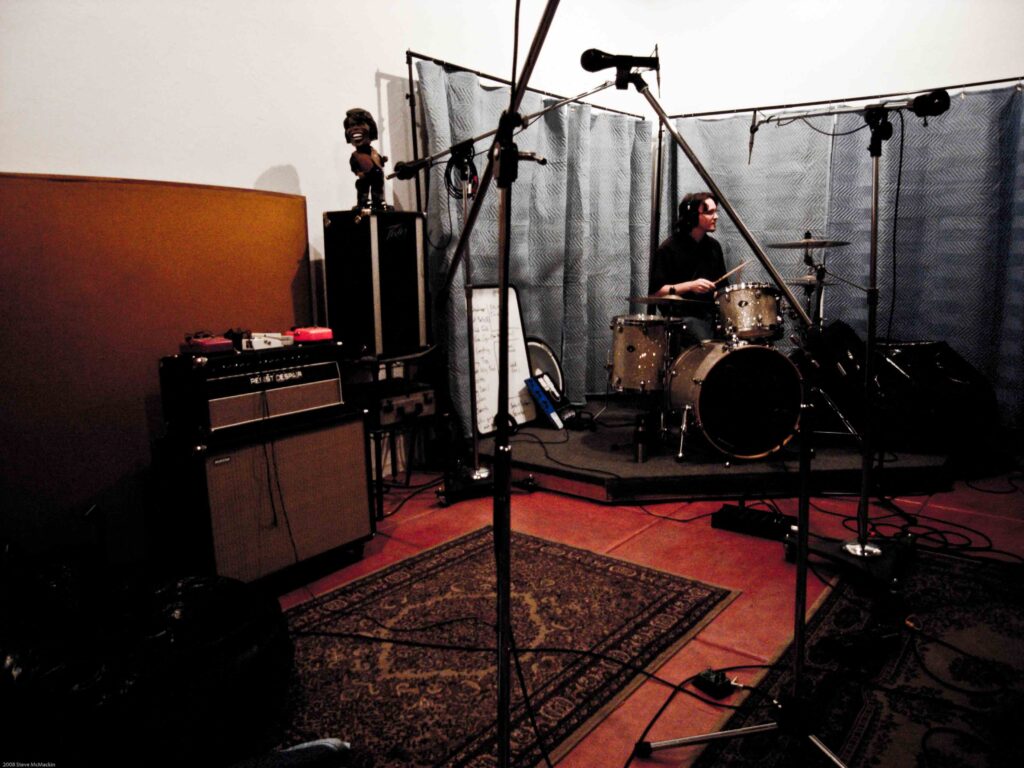
As for gear, I have an engineer’s mind for it. I have a Line6 Floorboard from my short-lived attempt at a live band. I technically have a pedalboard, but it’s just four fuzz pedals, a tuner, and a switch. I really love the wall-of-guitars sound, but as I mentioned, I’m not a great guitarist, so rather than try to overdub, I just play the same part into four fuzz pedals in parallel and record them all simultaneously. I also use Reaper, which is a wonderful DAW for people like me who like to tinker with efficiency.
Once this big project is done, I’m looking forward to taking a break, stepping back, and evaluating my entire process: what plugins I actually used, what presets I can make, what processes I can smooth out. I have at least a dozen spreadsheets regarding this album, if that gives you a sense of the level of nerd satisfaction I’m going to take from that process.
In your press release, you mention that you’ve been recording demos for years. I’d love to dive deeper into that, especially when it comes to the role that music has played in your life experience. Does music help you cope with a tough reality? Has your style evolved over the years?
Making sounds is really just … normal for me. I can’t really attribute it to coping or not coping, because I’ve been making them whether I’m happy or not.
My issue was that I wasn’t finishing anything; I didn’t get my ADHD diagnosis until I was in my 30s. I had the vexing experience of telling a close friend about it, and she stared at me for a solid 20 seconds before blurting out, “YOU DIDN’T KNOW!?!” I had built some systems for managing my life, but finishing songs is an exhausting process, and I simply never did the work to learn.
The Ramones never suddenly learned how to play like Van Halen just because they’d been playing power chords for 30 years. It doesn’t work like that. So my “style” was just whatever technology jostled me at the time. It was a passive thing, just playing with whatever was in reach. So early on, I was just poking at old sequencers. Then I was messing around with chord progressions that went nowhere, slathered in godawful, late-2000s free guitar effects. I started playing with ambient music because it was pretty and easy in the early 2010s.
As time went on, though, I learned more and more about music, and once I really started taking things seriously, I realised I had a huge advantage over my past self in that I had a massive library of mental music to sift through for inspiration, and that has been immensely helpful. I think it shows on the album, too. I will say, though, it really makes me love and appreciate it when I see kids in their teens and early twenties who are drinking in as much music as they can, and turning out amazing stuff at such an early age.
After years of demos, there was a trigger event (or trigger year) that motivated you to share your art with the wider world. Can you elaborate on that? Were you scared to share your music at all?
Well, in so many words, the 2016 election happened and my mom got a cancer diagnosis on the same day. This idea that I had a good album in me had been something I’d been kicking around for years, but I always figured I’d get around to it one day. But pancreatic cancer is no joke; the metastasised 5-year survival rate for it is about 2%, and she did not draw that one-in-fifty. My mom was amazing – a five-foot wilting blast of sunshine – and we’re all poorer for the loss. She had been retired for less than a year. So suddenly, she wasn’t going to hear my album.
A few years later, COVID happened. My dad and I had been estranged, initially over their divorce but more recently over politics, but he had been recovering his senses after discarding a bad bunch of friends. He had been taking his health seriously, but his Marine buddies weren’t; they believed the President’s assertions that COVID was no big deal. It took him almost a year to die. I managed to finish the first song just in time for him to hear it before we took him off life support. That was 2021.
More recently, my stepfather died. Then, in December, a close friend who was five years younger than me suddenly died of heart failure. I’m pretty sure I was the last person he texted. We were talking about what we were going to do when I visited him a few weeks later.
I’ve been extremely hesitant to share this music. I’m very confident in the music itself; I like my own album. I listen to it. And I’ve been an art director and graphic designer for many years, so I know that not every bit of art is for every pair of eyes. I don’t get too upset if someone doesn’t like my music. My issue is that it’s a ton of work to promote music, and I would rather be doing something else. It also creates obligations. The moment I put my album on sale, and someone bought it in pre-sale, I have to, you know, make it! And ship it! Up until that moment, if I had just deleted all my socials, people might have wondered what happened, but I wouldn’t have owed anyone anything.
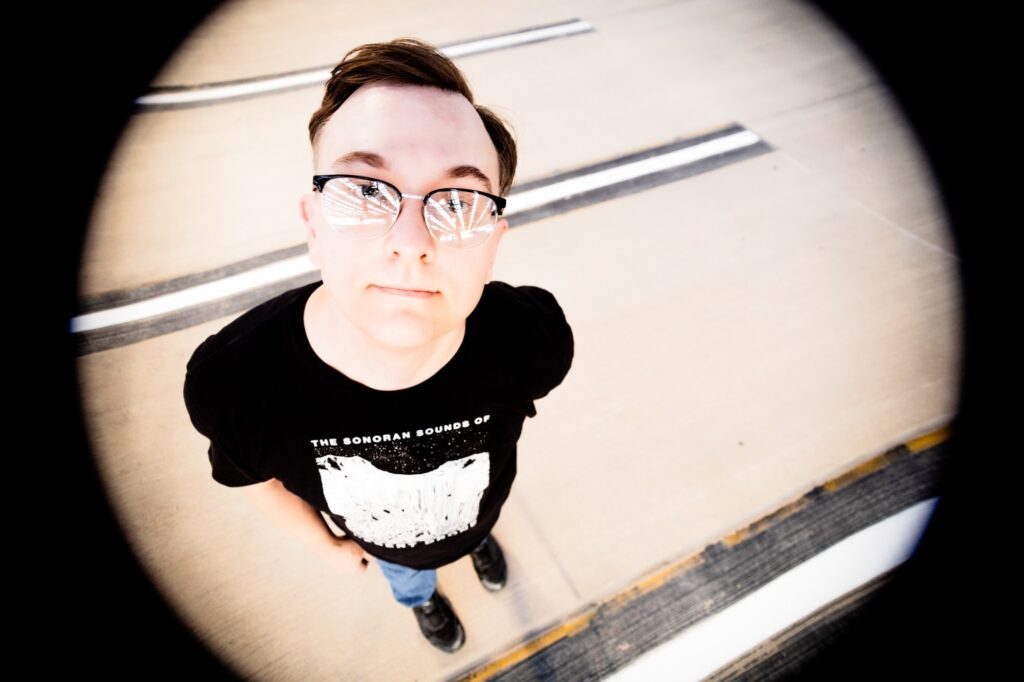
NOTHING IS EASY is your recently released album, a wonderful slice of instrumental euphoria steeped in hazy guitar tones and evocative harmonies. From a sonic and stylistic perspective, are you proud of the final result? Who was involved in its production?
I’m deeply proud of what I did. I accomplished my goal of making an album I liked. There are no parts that I would change, and that took a lot of tries. There were so many “nope, that’s going to bug me forever” moments. Even absolutely minuscule mixing tweaks were addressed. I just was not going to let this ship go unless I was completely happy with it. I’m also very happy with the B-sides as well. I like that they complement the album, expand the palette, the way B-sides should.
I did all of the writing, recording, and production. I did all of the rough mixes, but Christian Burnett, a buddy of mine I met on a songwriting Discord, took the mixes from there. I’m Sorry About Your Everything, Johnny Ringo, and A Wake were beyond my abilities and if I had tried to do it myself, it would be another year before it was released. Jim Blackwood at AZPM, the PBS/NPR affiliate at the University of Arizona in Tucson, did the mastering work and did a phenomenal job.
From a storytelling perspective, what does NOTHING IS EASY mean to you?
From around the time my mom was diagnosed with cancer, anytime something that felt like it should be easier than it was, I would just say, “ain’t nothing easy,” and do whatever needed doing. For example, if I were working on a video and dropped the small lapel mic I needed down into that annoying gap between the seat and console in my car, and now it’s going to take 5 or 10 minutes of awkward bending and grunting to extract it. Or something like that, except your parents are dying. It was a kind of flippant stoicism, and unfortunately, that phrase has been used a lot since then. I still use it pretty regularly.
The album itself, more broadly, is about that, but writ large. We all have these challenges. This record was marked by the passing of all my parental figures: my mother, father, and stepfather, in addition to Terry, and a few pets for good measure. It occurred to me early on in life that there are three possibilities when it comes to the question, “Who dies first, the parent or the child (me)?” The child could die first – universally recognised as tragic. They could all go out at the same time in some spectacular, newsworthy accident. Or, the best of bad options, the parents go first. So despite my grief, this was the way it was “supposed” to happen.
And so: if there is one thing we are going to experience besides our own deaths, it’s that of our parents. And yet look around, there is no preparation for this in society. It emotionally destroys people constantly. And at least in America, there is very little talk about these personal tragedies. Miscarriages, illnesses, accidents, pets; it’s all tucked neatly behind masks of civility with the tears leaking out from behind. (Ignorance of miscarriages is especially poisonous since so many people base their political leanings on pregnancy policy.) I don’t think we need to constantly bombard each other with too much information, but as it stands, we all feel alone in these things. I’m trying to tell people that we aren’t.
Do you feel more confident writing music alone or within a team?
In addition to this album, I’m also writing the music for an indie game soundtrack. It’s called The Origin of Gravity. It’s still in development, but the person behind it is amazing. She does all of the animation, principal artwork, most of the writing and background art, and some of the level design. She comes over to my house, we make breakfast with eggs from her chickens, we all hang out, and then we work on the soundtrack. She isn’t a musician at all, but that collaboration has been positively delightful.
Hopefully, in the future I can work with another musician on a project, too. I’ve been thinking it would be fun to do what Garbage did: work with an outgoing, loud, social female vocalist who can inspire people, write lyrics (I obviously have no interest there), while I get busy with the production stuff, the same way Shirley Manson, Butch Vig, and company did.
What are the next steps for your project? Anything exciting on the horizon?
Well, the next album is already titled and largely finished. It’s a cover album and entirely collaborative, and it should be out probably in October. It’s a sister album to NOTHING IS EASY; where this was solo, original, and retrospective, the next is collaborative, covers-based, and forward-looking. Then there’s the game soundtrack, and I’ve been tinkering with an ambient album for even longer than the demos for this album, so I suppose I should finish that and release it as well.
But if you want to hear anything about the latter two, you’ll probably want to be on my email list, because after that, I’m quitting a lot of things. I don’t like the algorithms, I don’t like the promotion, I don’t like that the vast majority of people scroll away from a video I spent 4 hours on within 2 seconds. To be clear, I’m going to keep making music. I’m very excited about that.
NOTHING IS EASY was an exercise in solo work, and I never want to do that again as a rule. Future work will be collaborative quite often. But as far as the promotion and all that? No way. I’ll occasionally post on whatever social media platforms the psychotic billionaires who own them permit me to, but only when I feel like it.